
 Contact
 Hoe winkelen bij ons werkt
Bezorging
Winkelgids
 Engels
 36 b
36 b
 Nieuw
Nieuw
Retourneren binnen 30 dagen

Trauma is not merely something that happened to you. It is something the nervous system learned to build around.
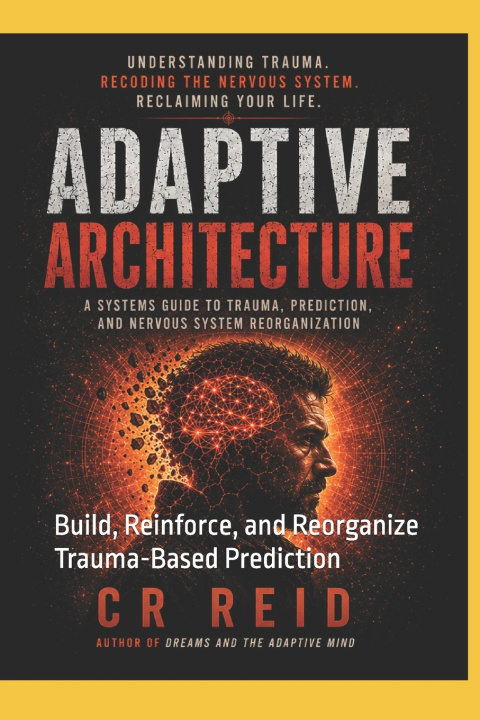
In Adaptive Architecture, neuropsychotherapist and trauma specialist CR Reid presents the framework for understanding PTSD, complex trauma, attachment wounds, chronic stress, and survival-based patterns through a new lens: the nervous system as an adaptive prediction engine.
Rather than viewing trauma as a collection of symptoms, this book explores how repeated exposure to threat, instability, loss, and unpredictability gradually shapes the architecture of the mind itself. Over time, survival responses become operating systems. Vigilance becomes identity. Emotional protection becomes personality. What once helped a person endure difficult circumstances can later become the very structure that keeps them stuck.
Drawing from neuroscience, trauma psychology, attachment theory, autonomic nervous system research, memory reconsolidation, and modern predictive processing models, Adaptive Architecture examines how the brain and body organize around survival-and how those structures can ultimately change.
Inside, you'll discover:
• Why the nervous system prioritizes predictability over happiness
• How fight, flight, freeze, and fawn become long-term operating systems
• The hidden relationship between trauma, attention, emotion, and identity
• Why survival patterns often persist long after danger has passed
• How attachment experiences shape predictive models of relationships
• Why insight alone rarely creates lasting change
• The role of prediction error in healing and recovery
• How memory reconsolidation alters the meaning of past experiences
• Why autonomic regulation is essential for transformation
• How the nervous system gradually reorganizes itself toward safety
Through a clear and accessible systems-based approach, Reid challenges many traditional assumptions about trauma recovery. Healing is not portrayed as the elimination of symptoms, the suppression of difficult emotions, or the destruction of old survival patterns. Instead, it is understood as a process of structural reorganization-a gradual updating of the nervous system's expectations about safety, connection, uncertainty, and selfhood.
Whether you are a trauma survivor, clinician, therapist, coach, student, or simply someone seeking a deeper understanding of human adaptation, Adaptive Architecture offers a powerful new perspective on why we become who we are-and how change becomes possible.
Healing is not demolishing the structure that kept you alive. It is teaching the nervous system that it no longer has to live under siege.


Informatie over het boek
Engels

Geef dit boek vandaag nog cadeau
Dat gaat heel eenvoudig
1 Voeg het boek toe aan je winkelwagentje en selecteer Als cadeau bezorgen 2 Je krijgt van ons per omgaand een voucher 3 Het boek wordt bezorgd op het adres van de ontvangerHoi! Ik ben Libroamiko, je boekadviseur.
Hoe kan ik je helpen?