
 Contact
 Hoe winkelen bij ons werkt
Bezorging
Winkelgids
 Engels
 32 b
32 b
 Nieuw
Nieuw
Tot 30 dagen retourrecht

The body already knows what it refuses. The Aghori path is the long work of introducing yourself to what you have been running from.
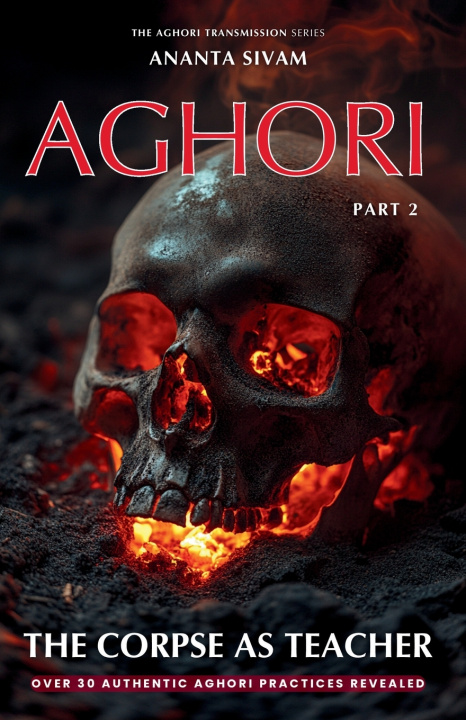
Aghori: The Corpse as Teacher is the second volume of The Aghori Transmission, a series examining the practices and philosophy of India's most radical initiatory tradition. Where the first volume established the doctrinal architecture of non-rejection, this volume enters the laboratory.
The practices examined here are three in their major categories. The first is vibhuti: sacred ash drawn from the cremation fire, applied daily to the skin as both ritual and perceptual technology. The second is the kapala, the skull bowl, which functions as a cognitive confrontation that begins long before any ritual use, and continues to resist being made into furniture for as long as the practitioner remains honest about what it is. The third, and the apex of this volume's inquiry, is shava sadhana: meditation conducted in direct physical contact with a human corpse, at a cremation ground, in the hour before dawn. Between these practices, occupying the central section of the book, is a thorough examination of the Pancha Makar, the five ritual elements whose names begin with the Sanskrit letter ma and whose reputation has produced more misunderstanding in both popular and scholarly literature than any other dimension of Tantric practice.
What this volume argues, through fieldwork conducted over years at sites including Varanasi, Tarapith, and the cremation grounds of Chhattisgarh, is that these practices are not transgressions for their own sake. They are a systematic, empirically refined curriculum designed to accomplish a specific task: the functional reorganization of the nervous system's disgust reflex, the ancient mechanism through which the body enforces its inherited categories of the pure and the impure. The Aghori tradition holds that insight which has not been metabolized into tissue and nervous system is not yet insight but only its approximation. The chapters that follow are an attempt to map what it takes to close that gap.
Each chapter moves through practice and mechanism in the same sequence the tradition itself uses. The practitioner's account arrives first. The psychological and neurological mechanism follows, not as an explanation that supersedes the tradition's own understanding, but as a translation into a vocabulary available to readers outside the doctrinal framework. Where the two accounts cannot be reconciled, the gap is noted rather than resolved in favor of either.
This is not a manual for self-directed practice. The practices described here belong to living initiatory lineages that transmit through direct relationship, and the tradition is explicit that textual description without transmission is an inadequate condition for undertaking them. What this volume offers instead is the most rigorous and unflinching account available in English of what these practices are, what they demand, and what they produce in the practitioner who undertakes them under qualified guidance and across sufficient time.
The body that enters these practices is not the body that emerges from them. This is not a metaphor. The chapters that follow explain why.


Informatie over het boek
Engels
