
 Contact
 Hoe winkelen bij ons werkt
Bezorging
Winkelgids
 Engels
 392 b
392 b
Tot 30 dagen retourrecht
Klanten kochten ook











 /
/
 Gebonden (paperback)
 26.58
€
26.58
€



 /
Gebonden (paperback)
5.75
€
/
Gebonden (paperback)
5.75
€






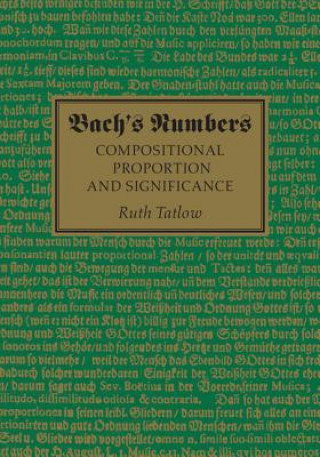
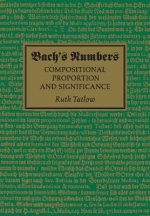
In eighteenth-century Germany the universal harmony of God's creation and the perfection of its proportions still held philosophical, moral and devotional significance. Reproducing proportions close to the unity (1:1) across compositions could render them beautiful, perfect and even eternal. Using the principles of her groundbreaking theory of proportional parallelism and the latest source study research, Ruth Tatlow reveals how Bach used the number of bars to create numerical perfection across his published collections, and explains why he did so. The first part of the book shows the wide-ranging application of belief in the unity, demonstrating how planning a perfect structure was a normal compositional procedure in Bach's time. In the second part Tatlow presents practical demonstrations of this in all Bach's publications and fair copies, showing that layers of proportion can appear within a movement, a work, between two works in a collection, across a collection or between collections themselves.


Informatie over het boek
Engels

Geef dit boek vandaag nog cadeau
Dat gaat heel eenvoudig
1 Voeg het boek toe aan je winkelwagentje en selecteer Als cadeau bezorgen 2 Je krijgt van ons per omgaand een voucher 3 Het boek wordt bezorgd op het adres van de ontvangerDit vind je misschien ook interessant






















Hoi! Ik ben Libroamiko, je boekadviseur.
Hoe kan ik je helpen?