
 Contact
 Hoe winkelen bij ons werkt
Bezorging
Winkelgids
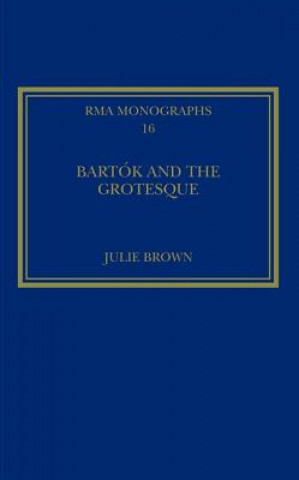
Bartok and the Grotesque
 Engels
 609 b
609 b
Tot 30 dagen retourrecht
Klanten kochten ook





 /
/
 Gebonden (paperback)
 21.64
€
21.64
€

The grotesque is one of art's most puzzling figures - transgressive, comprising an unresolvable hybrid, generally focussing on the human body, full of hyperbole, and ultimately semantically deeply puzzling. In "Bluebeard's Castle" (1911), "The Wooden Prince" (1916/17), "The Miraculous Mandarin" (1919/24, rev. 1931) and "Cantata Profana" (1930), Bartok engaged scenarios featuring either overtly grotesque bodies or closely related transformations and violations of the body. In a number of instrumental works he also overtly engaged grotesque satirical strategies, sometimes - as in "Two Portraits: 'Ideal' and 'Grotesque'" - indicating this in the title.In this book, Julie Brown argues that Bartok's concerns with stylistic hybridity (high-low, East-West, tonalatonal-modal), the body, and the grotesque are inter-connected. While Bartok developed each interest in highly individual ways, and did so separately to a considerable extent, the three concerns remained conceptually interlinked. All three were throughly implicated in cultural constructions of the Modern during the period in which Bartok was composing.


Informatie over het boek
Engels

Geef dit boek vandaag nog cadeau
Dat gaat heel eenvoudig
1 Voeg het boek toe aan je winkelwagentje en selecteer Als cadeau bezorgen 2 Je krijgt van ons per omgaand een voucher 3 Het boek wordt bezorgd op het adres van de ontvangerDit vind je misschien ook interessant






 /
Gebonden (paperback)
24.77
€
/
Gebonden (paperback)
24.77
€
 /
Gebonden (paperback)
11.32
€
/
Gebonden (paperback)
11.32
€
Hoi! Ik ben Libroamiko, je boekadviseur.
Hoe kan ik je helpen?