
 Contact
 Hoe winkelen bij ons werkt
Bezorging
Winkelgids
 Engels
 77 b
77 b
Retourneren binnen 30 dagen
Klanten kochten ook




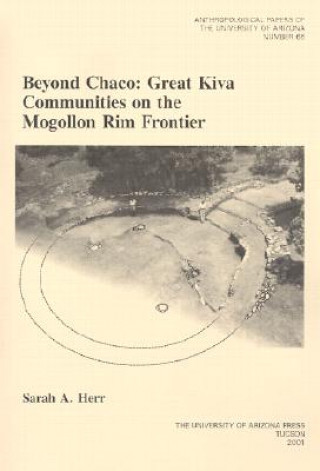
During the eleventh and twelfth centuries A.D., the Mogollon Rim region of east-central Arizona was a frontier, situated beyond and between larger regional organizations such as Chaco, Hohokam, and Mimbres. On this southwestern edge of the Puebloan world, past settlement poses a contradiction to those who study it. Population density was low, yet the region was overbuilt with great kivas, a form of community-level architecture.Using a frontier model to evaluate household, community, and regional data, Sarah Herr demonstrates that the archaeological patterns of the Mogollon Rim region were created by the flexible and creative behaviors of small-scale agriculturalists. Herr's research shows that the eleventh-and twelfth-century inhabitants of the Mogollon Rim region were recent migrants, probably from the southern portion of the Chacoan region. These early settlers built houses and ceremonial structures and made ceramic vessels that resembled those of their homeland, but their social and political organization was not the same as that of their ancestors. Mogollon Rim communities were shaped by the cultural backgrounds of migrants, by their liminal position on the political landscape, and by the unique processes associated with frontiers.As migrants moved from homeland to frontier, a reversal in the proportion of land to labor dramatically changed the social relations of production. Herr argues that when the context of production changes in this way, wealth-in-people becomes more valuable than material wealth, and social relationships and cultural symbols such as the great kiva must be reinterpreted accordingly.


Informatie over het boek
Engels
Categorieën

Geef dit boek vandaag nog cadeau
Dat gaat heel eenvoudig
1 Voeg het boek toe aan je winkelwagentje en selecteer Als cadeau bezorgen 2 Je krijgt van ons per omgaand een voucher 3 Het boek wordt bezorgd op het adres van de ontvangerDit vind je misschien ook interessant

 /
/
 Gebonden (harde band)
 549.94
€
549.94
€







Hoi! Ik ben Libroamiko, je boekadviseur.
Hoe kan ik je helpen?