Contact
 Hoe winkelen bij ons werkt
Bezorging
Winkelgids
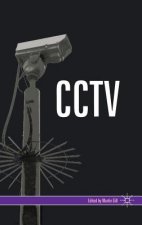
CCTV
 Engels

 569 b
569 b
Retourneren binnen 30 dagen
Klanten kochten ook









 /
/
 Gebonden (paperback)
 53.04
€
53.04
€


Central state and non-covert surveillance began in earnest at the start of the twentieth century. By the start of the twenty-first century, the UK was one of the most surveilled societies on earth. This groundbreaking volume by Inga Kroener analyses the particular combination of factors that have created this surveillance state. Kroener argues against the inevitability of the rise of CCTV that is so often found in this literature, to map out the early history of CCTV, tracing its development from a tool for education, safety and transport during the 1950s, to one of politics in the 1970s and 1980s, to eventually become a tool of surveillance during the 1990s. Within this analysis, the complex role of the public in 'allowing' the widespread and rapid dissemination of CCTV is discussed and the representation of CCTV in the media is also studied.This volume will be of interest to all scholars working in the fields of surveillance studies; science, technology and society departments; and social historians more generally.


Informatie over het boek
Engels

Geef dit boek vandaag nog cadeau
Dat gaat heel eenvoudig
1 Voeg het boek toe aan je winkelwagentje en selecteer Als cadeau bezorgen 2 Je krijgt van ons per omgaand een voucher 3 Het boek wordt bezorgd op het adres van de ontvangerDit vind je misschien ook interessant




 /
Gebonden (paperback)
14.74
€
/
Gebonden (paperback)
14.74
€



 /
Gebonden (paperback)
50.01
€
/
Gebonden (paperback)
50.01
€
 /
Gebonden (harde band)
53.35
€
/
Gebonden (harde band)
53.35
€