
 Contact
 Hoe winkelen bij ons werkt
Bezorging
Winkelgids
 Engels
 97 b
97 b
Tot 30 dagen retourrecht
Klanten kochten ook
 /
/
 Gebonden (paperback)
 18.48
€
18.48
€





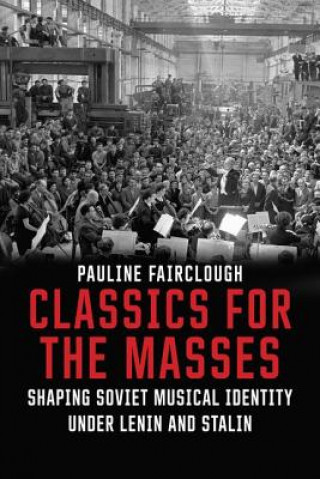
Musicologist Pauline Fairclough explores the evolving role of music in shaping the cultural identity of the Soviet Union in a revelatory work that counters certain hitherto accepted views of an unbending, unchanging state policy of repression, censorship, and dissonance that existed in all areas of Soviet artistic endeavor. Newly opened archives from the Leninist and Stalinist eras have shed new light on Soviet concert life, demonstrating how the music of the past was used to help mold and deliver cultural policy, how "undesirable" repertoire was weeded out during the 1920s, and how Russian and non-Russian composers such as Mozart, Tchaikovsky, Wagner, Bach, and Rachmaninov were "canonized" during different, distinct periods in Stalinist culture. Fairclough's fascinating study of the ever-shifting Soviet musical-political landscape identifies 1937 as the start of a cultural Cold War, rather than occurring post-World War Two, as often maintained, while documenting the efforts of musicians and bureaucrats during this period to keep musical channels open between Russia and the West.


Informatie over het boek
Engels
Categorieën

Geef dit boek vandaag nog cadeau
Dat gaat heel eenvoudig
1 Voeg het boek toe aan je winkelwagentje en selecteer Als cadeau bezorgen 2 Je krijgt van ons per omgaand een voucher 3 Het boek wordt bezorgd op het adres van de ontvangerDit vind je misschien ook interessant







Hoi! Ik ben Libroamiko, je boekadviseur.
Hoe kan ik je helpen?