
 Contact
 Hoe winkelen bij ons werkt
Bezorging
Winkelgids
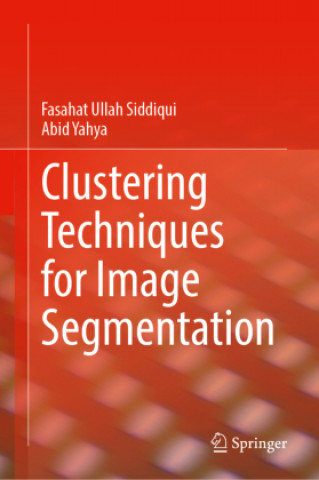
Clustering Techniques for Image Segmentation
 Engels
 217 b
217 b
Tot 30 dagen retourrecht
Klanten kochten ook



 /
/
 Gebonden (paperback)
 42.85
€
42.85
€



 /
Gebonden (harde band)
39.21
€
/
Gebonden (harde band)
39.21
€

This book presents the workings of major clustering techniques along with their advantages and shortcomings. After introducing the topic, the authors illustrate their modified version that avoids those shortcomings. The book then introduces four modified clustering techniques, namely the Optimized K-Means (OKM), Enhanced Moving K-Means-1(EMKM-1), Enhanced Moving K-Means-2(EMKM-2), and Outlier Rejection Fuzzy C-Means (ORFCM). The authors show how the OKM technique can differentiate the empty and zero variance cluster, and the data assignment procedure of the K-mean clustering technique is redesigned. They then show how the EMKM-1 and EMKM-2 techniques reform the data-transferring concept of the Adaptive Moving K-Means (AMKM) to avoid the centroid trapping problem. And that the ORFCM technique uses the adaptable membership function to moderate the outlier effects on the Fuzzy C-meaning clustering technique. This book also covers the working steps and codings of quantitative analysis methods. The results highlight that the modified clustering techniques generate more homogenous regions in an image with better shape and sharp edge preservation.Showcases major clustering techniques, detailing their advantages and shortcomings;Includes several methods for evaluating the performance of segmentation techniques;Presents several applications including medical diagnosis systems, satellite imaging systems, and biometric systems.


Informatie over het boek
Engels

Geef dit boek vandaag nog cadeau
Dat gaat heel eenvoudig
1 Voeg het boek toe aan je winkelwagentje en selecteer Als cadeau bezorgen 2 Je krijgt van ons per omgaand een voucher 3 Het boek wordt bezorgd op het adres van de ontvangerDit vind je misschien ook interessant
 /
Gebonden (harde band)
205.62
€
/
Gebonden (harde band)
205.62
€








 /
Gebonden (paperback)
49.53
€
/
Gebonden (paperback)
49.53
€


 /
Gebonden (harde band)
140.71
€
/
Gebonden (harde band)
140.71
€










 /
Gebonden (paperback)
51.65
€
/
Gebonden (paperback)
51.65
€
Hoi! Ik ben Libroamiko, je boekadviseur.
Hoe kan ik je helpen?