
 Contact
 Hoe winkelen bij ons werkt
Bezorging
Winkelgids
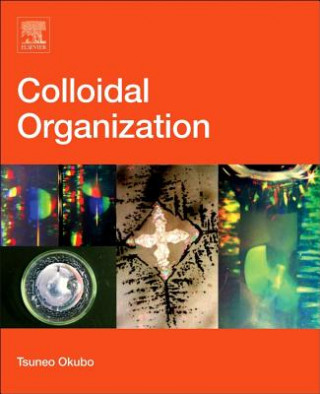
Colloidal Organization
 Engels
 378 b
378 b
Retourneren binnen 30 dagen
Klanten kochten ook

 /
/
 Gebonden (paperback)
 95.48
€
95.48
€






 /
Gebonden (paperback)
19.19
€
/
Gebonden (paperback)
19.19
€



 /
Gebonden (paperback)
13.03
€
/
Gebonden (paperback)
13.03
€





 /
Gebonden (paperback)
35.66
€
/
Gebonden (paperback)
35.66
€


 /
Gebonden (paperback)
49.81
€
/
Gebonden (paperback)
49.81
€



 /
Gebonden (paperback)
16.16
€
/
Gebonden (paperback)
16.16
€



China currently leads the world in death sentences and executions, making it a primary target for the global abolition movement. While the results have been subtle, anti-death penalty advocates are beginning to influence Chinese attitudes toward the practice, as well as law. Conducting an interdisciplinary and comparative study of China's death penalty as the country heads toward reform, this book explains what it took to advance reforms to limit death sentences and executions, while identifying the challenges that prevent more extensive progress. Featuring experts from Europe, Australia, Japan, China, and the United States, this collection follows changes in the theory and policy of China's death penalty from the Mao era (1949-1979) through the Deng era (1980-1997) up to the present day. Using empirical data, such as capital offender and offense profiles, temporal and regional variations in capital punishment, and the impact of social media on public opinion and reform, contributors relay both the particular character of China's death penalty practices and the incremental changes that indicate reform. They then compare the Chinese experience to other countries throughout Asia and the world, showing how change can be implemented even within a non-democratic and rigid political system, but also the dangers of pushing policies that society may not be ready to embrace.


Informatie over het boek
Engels
Categorieën

Geef dit boek vandaag nog cadeau
Dat gaat heel eenvoudig
1 Voeg het boek toe aan je winkelwagentje en selecteer Als cadeau bezorgen 2 Je krijgt van ons per omgaand een voucher 3 Het boek wordt bezorgd op het adres van de ontvangerDit vind je misschien ook interessant





 /
Gebonden (paperback)
15.75
€
/
Gebonden (paperback)
15.75
€

 /
Gebonden (paperback)
102.86
€
/
Gebonden (paperback)
102.86
€



 /
Gebonden (paperback)
6.36
€
/
Gebonden (paperback)
6.36
€








 /
Gebonden (paperback)
36.37
€
/
Gebonden (paperback)
36.37
€