
 Contact
 Hoe winkelen bij ons werkt
Bezorging
Winkelgids
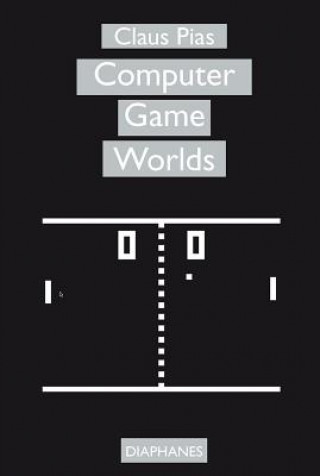
Computer Game Worlds
 Engels
 117 b
117 b
Retourneren binnen 30 dagen
Klanten kochten ook
























 /
/
 Gebonden (paperback)
 24.10
€
24.10
€







Computer games dominate millions of private computer screens. For half a century they have no longer been the exclusive business of laboratories, military advisors and subcultures. Nevertheless, no one has ever posed the most obvious of all questions: why do computer games exist? Computer games (as we know them) came unasked for and cannot be taken for granted, if only for this one simple reason. But what peculiar date and place brought such completely heterogeneous appliances, bodies and symbolisms together to form (long-prepared and yet sudden) this totally new kind of game? What type of knowledge is it that cuts across technologies, institutions and machines striving to shape today's games? Pias's archaeology of the computer game is not solely a survey of the numerous objects, apparatus and ensembles which have been crafted, constructed and installed only to reappear one day as commercial products. It is, simultaneously and exceedingly, also an epistemical reconstruction of game playing at and with computers and by computers themselves, an archaeology of the computer game which no longer relies on the individual's freedom from "his" or "her" game. It is the economies of time, decision and regulation, embodied in hard- and software, that form the materiality of the games in which information societies think their own game.


Informatie over het boek
Engels

Geef dit boek vandaag nog cadeau
Dat gaat heel eenvoudig
1 Voeg het boek toe aan je winkelwagentje en selecteer Als cadeau bezorgen 2 Je krijgt van ons per omgaand een voucher 3 Het boek wordt bezorgd op het adres van de ontvangerDit vind je misschien ook interessant
 /
Gebonden (harde band)
19.44
€
/
Gebonden (harde band)
19.44
€

 /
Gebonden (paperback)
18.12
€
/
Gebonden (paperback)
18.12
€




 /
Gebonden (harde band)
51.44
€
/
Gebonden (harde band)
51.44
€





 /
Gebonden (paperback)
18.22
€
/
Gebonden (paperback)
18.22
€
 /
Gebonden (paperback)
10.12
€
/
Gebonden (paperback)
10.12
€










Hoi! Ik ben Libroamiko, je boekadviseur.
Hoe kan ik je helpen?