
 Contact
 Hoe winkelen bij ons werkt
Bezorging
Winkelgids
 Engels
 74 b
74 b
 Wordt verwacht
 Nieuw
Nieuw
Tot 30 dagen retourrecht

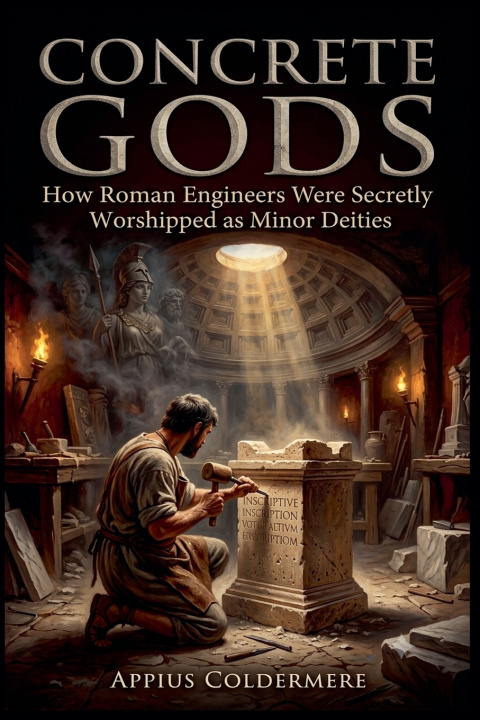
Every schoolbook tells you the Romans worshipped Jupiter, Mars, and Minerva. Almost none of them tell you that Rome's builders may have stood closer to the altar than the aristocrats did.
In the hills above a port town in North Africa, an old military surveyor named Nonius Datus was ambushed on a mountain road, robbed, and left half naked before he even reached the water tunnel he had been summoned to save. When he finally fixed it, correcting a catastrophic twelve year survey error that had left two work crews digging blindly toward each other in the dark, he did something almost no other craftsman in the ancient world is known to have done. He carved his own field report into stone, in his own voice, and thanked the gods for it in the same sentence as his measurements.
That stone still exists. So does the tunnel. And so, this book argues, does an entire hidden religious world that has been sitting in plain sight for two thousand years, waiting for someone to read it correctly.
Concrete Gods follows the architects, surveyors, freed slaves, and forgotten guild workers who built the Roman Empire's roads, aqueducts, and domes, and asks a question popular history has never quite dared to ask directly: what if the people who built Rome were never just tradesmen? What if their guilds, their goddess, their tools, and even their highest religious title, a word that may translate literally to bridge builder, tell us they occupied something close to a priesthood of their own?
You will meet Apollodorus of Damascus, the architect whose brilliance may have gotten him killed by an emperor who could not stand being corrected. You will stand beneath the Pantheon's dome and learn why its open eye to the sky was never a design flaw. You will read the actual dedication carved by a wealthy Roman businesswoman who funded one of Pompeii's grandest buildings, and meet the enslaved brickyard workers who built genuine fortunes and freedom out of nothing but their own hands and skill. You will walk Hadrian's Wall stone by stone, century by century, reading the graffiti soldiers scratched beside their commanding officer's name two thousand years ago.
And you will discover why Massachusetts Institute of Technology scientists spent years trying to steal one particular secret from Roman concrete, a self healing chemistry so advanced it is only now being reverse engineered for the buildings of the next century.
This is not a dry academic survey. It reads like the historical thriller it actually is, built entirely from real inscriptions, real archaeology, and real published research, without a single invented fact. Every claim is sourced. Every uncertainty is named honestly rather than smoothed over for effect.
If you loved the way SPQR or The Storm Before the Storm made ancient Rome feel alive again, Concrete Gods will do something neither of those books attempted. It will make you look at a bridge, a wall, or a dome, anywhere in the world, and wonder who built it, what they believed while they were doing it, and whether we have been wrong all along about where the sacred ends and the practical begins.
Pick it up tonight. You will not want to put it down until the last stone is laid.


Informatie over het boek
Engels

Geef dit boek vandaag nog cadeau
Dat gaat heel eenvoudig
1 Voeg het boek toe aan je winkelwagentje en selecteer Als cadeau bezorgen 2 Je krijgt van ons per omgaand een voucher 3 Het boek wordt bezorgd op het adres van de ontvangerHoi! Ik ben Libroamiko, je boekadviseur.
Hoe kan ik je helpen?