
 Contact
 Hoe winkelen bij ons werkt
Bezorging
Winkelgids
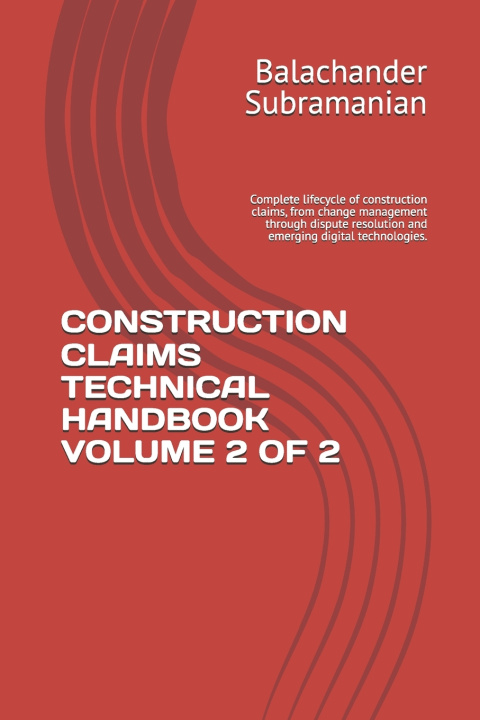
CONSTRUCTION CLAIMS TECHNICAL HANDBOOK VOLUME 2 OF 2
Complete lifecycle of construction claims, from change management through dispute resolution and emerging digital technologies.
 Engels
 90 b
90 b
 Nieuw
Nieuw
Tot 30 dagen retourrecht

Construction projects rarely progress exactly as originally planned. As projects become increasingly complex, involving multiple stakeholders, sophisticated engineering, evolving client requirements, regulatory changes, technological innovations, and significant commercial risks, construction claims have become an integral component of successful project delivery. Managing claims effectively requires much more than contractual knowledge-it demands expertise in engineering, project management, planning, scheduling, commercial management, quantity surveying, project controls, forensic delay analysis, cost engineering, dispute resolution, and digital technologies.
Construction Claims Technical Handbook - Volume 2 builds upon the fundamental principles established in Volume 1 and advances into the specialized disciplines that distinguish competent claims professionals from industry experts. This volume focuses on the advanced aspects of claims management, including variations, constructive changes, design change claims, differing site conditions, professional claim preparation, expert witness practice, negotiation, adjudication, arbitration, litigation, enterprise claims management systems, and the rapidly evolving role of digital technologies such as Building Information Modeling (BIM), Artificial Intelligence (AI), Digital Twins, predictive analytics, blockchain, and machine learning.
The handbook adopts a practical, process-oriented approach that mirrors the lifecycle of a construction claim. Beginning with contractual changes and variations, it explains how changes arise, how they should be documented, valued, and administered, and how they frequently evolve into delay, disruption, productivity, and cost claims. It then guides readers through the preparation of professional claim submissions supported by contractual entitlement, factual evidence, delay analysis, quantum calculations, and contemporaneous documentation.
Recognizing that many claims eventually proceed beyond commercial negotiations, the book provides comprehensive coverage of expert witness practice, dispute boards, adjudication, arbitration, and litigation. These chapters explain not only the legal and procedural aspects of dispute resolution but also the technical responsibilities of claims professionals in preparing evidence, presenting expert opinions, and supporting dispute resolution processes.
One of the defining strengths of this handbook is its forward-looking perspective. The construction industry is undergoing rapid digital transformation, and claims management is evolving accordingly. Digital project records, cloud-based collaboration, BIM models, AI-assisted document review, predictive analytics, blockchain-enabled records, and integrated project controls are reshaping how evidence is collected, analyzed, and presented. This volume explores these developments while maintaining a strong foundation in internationally recognized best practices.
The handbook concludes with an extensive collection of practical appendices, including claim templates, registers, worksheets, checklists, glossaries, standard contract clauses, acronyms, international standards, and recommended references. These resources transform the handbook from a theoretical reference into a practical day-to-day guide that professionals can immediately apply on construction projects.
Whether managing a major infrastructure program, industrial development, transportation project, commercial building, energy facility, or public works project, readers will find practical methodologies that improve documentation, strengthen contractual entitlement, reduce disputes, and enhance the successful resolution of construction claims.


Informatie over het boek
Engels

Geef dit boek vandaag nog cadeau
Dat gaat heel eenvoudig
1 Voeg het boek toe aan je winkelwagentje en selecteer Als cadeau bezorgen 2 Je krijgt van ons per omgaand een voucher 3 Het boek wordt bezorgd op het adres van de ontvangerHoi! Ik ben Libroamiko, je boekadviseur.
Hoe kan ik je helpen?