
 Contact
 Hoe winkelen bij ons werkt

Bezorging
Winkelgids
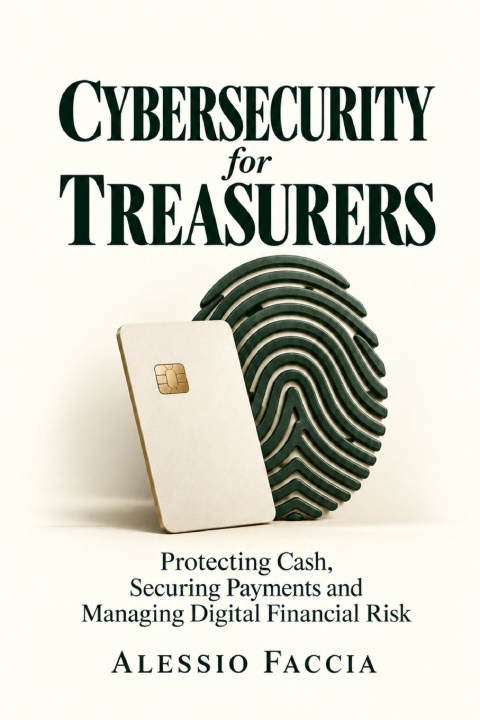
Cybersecurity for Treasurers
Protecting Cash, Securing Payments and Managing Digital Financial RiskProtect organisational cash, secure payment instructions and prepare treasury operations for cyber d
 Engels
 110 b
 Nieuw
 Wordt voor Kerst bezorgd ▾
In extern magazijn
Wordt binnen 14-21 dagen verzonden
Tot 30 dagen retourrecht

Protect organisational cash, secure payment instructions and prepare treasury operations for cyber disruption.
Cybersecurity for Treasurers: Protecting Cash, Securing Payments and Managing Digital Financial Risk connects cybersecurity with the financial decisions treasurers make every day. Alessio Faccia examines how fraudulent communications, compromised accounts, altered records and unavailable systems affect payment authority, liquidity and the organisation's ability to meet its obligations.
Written for treasurers, CFOs, finance managers, financial controllers, internal auditors and risk professionals, the book follows the complete route from an underlying obligation to approval, transmission, settlement and reconciliation. Readers examine permissions, records and dependencies supporting each stage and identify weaknesses exposing funds.
Opening chapters address business email compromise, payment diversion, phishing, account takeover, ransomware, insider threats and supplier fraud. The discussion shows how attackers influence beneficiary details, exploit urgent requests and misuse access to financial systems.
Payment security receives attention through independent authorisation, segregation of duties, beneficiary verification and controlled bank-detail changes. Access controls, authentication, privileged accounts and automated interfaces receive examination according to the financial capabilities they provide. Transaction monitoring, reconciliation and exception handling connect recorded activity with verified outcomes and accountable decisions.
Governance chapters establish responsibilities across treasury, ICT and finance and explain how to assess cyber risks through credible financial scenarios. Reviews of banks, payment providers and technology suppliers address service responsibilities, assurance evidence, administrative access and continuity commitments. Control testing and audit documentation help readers examine whether safeguards operate across the relevant transactions, users and reporting periods.
Staff training, fraud simulations and risk reporting support informed action within roles. The book examines how to assess verification behaviour, reporting speed and the response to suspicious requests. Management reporting connects those observations with financial exposure, control coverage and corrective work requiring ownership.
Incident response chapters explain how to identify suspicious events, activate response arrangements and coordinate containment across financial and technical teams. Digital evidence preservation supports reconstruction of communications, access events, beneficiary amendments and payment instructions. Banking coordination addresses payment recalls, transaction tracing and stolen funds recovery through documented enquiries.
Liquidity continuity focuses on deployable cash, essential obligations and emergency funding during disruption. Readers examine alternative payment routes, drawdown requirements, payment priorities and duplicate-payment prevention. Restoration procedures connect trusted systems with reconciled records, current permissions and verified business acceptance.
Loss review separates unauthorised transfers, confirmed recoveries, response expenditure and additional financing costs. Post-incident analysis connects observed failures with corrective actions and testing. Hypothetical examples illustrate funding gaps, approval failures, reconciliation limits and recovery calculations through explicit assumptions.
The book supports professional judgement with questions about authority, evidence and operational timing. Its focus on corporate treasury security, payment fraud prevention, cyber risk management, internal controls and financial continuity gives readers a coherent basis for reviewing the arrangements protecting organisational funds.


Informatie over het boek
Engels

Geef dit boek vandaag nog cadeau
Dat gaat heel eenvoudig
1 Voeg het boek toe aan je winkelwagentje en selecteer Als cadeau bezorgen 2 Je krijgt van ons per omgaand een voucher 3 Het boek wordt bezorgd op het adres van de ontvangerHoi! Ik ben Libroamiko, je boekadviseur.
Hoe kan ik je helpen?