
 Contact
 Hoe winkelen bij ons werkt
Bezorging
Winkelgids
Data Fusion for Sensory Information Processing Systems
 Engels
 444 b
444 b
Tot 30 dagen retourrecht
Klanten kochten ook












 /
/
 Gebonden (paperback)
 61.11
€
61.11
€



 /
Gebonden (paperback)
12.70
€
/
Gebonden (paperback)
12.70
€





 /
Gebonden (paperback)
40.84
€
/
Gebonden (paperback)
40.84
€
 /
Gebonden (paperback)
52.44
€
/
Gebonden (paperback)
52.44
€

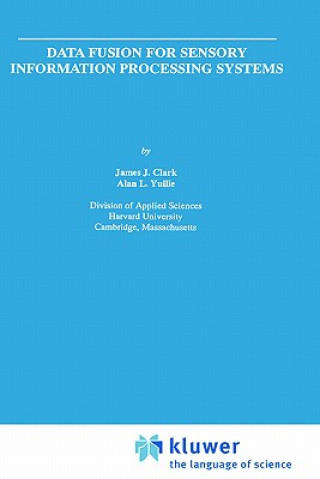
The science associated with the development of artificial sen sory systems is occupied primarily with determining how information about the world can be extracted from sensory data. For example, computational vision is, for the most part, concerned with the de velopment of algorithms for distilling information about the world and recognition of various objects in the environ (e. g. localization ment) from visual images (e. g. photographs or video frames). There are often a multitude of ways in which a specific piece of informa tion about the world can be obtained from sensory data. A subarea of research into sensory systems has arisen which is concerned with methods for combining these various information sources. This field is known as data fusion, or sensor fusion. The literature on data fusion is extensive, indicating the intense interest in this topic, but is quite chaotic. There are no accepted approaches, save for a few special cases, and many of the best methods are ad hoc. This book represents our attempt at providing a mathematical foundation upon which data fusion algorithms can be constructed and analyzed. The methodology that we present in this text is mo tivated by a strong belief in the importance of constraints in sensory information processing systems. In our view, data fusion is best un derstood as the embedding of multiple constraints on the solution to a sensory information processing problem into the solution pro cess.


Informatie over het boek
Engels
Categorieën

Geef dit boek vandaag nog cadeau
Dat gaat heel eenvoudig
1 Voeg het boek toe aan je winkelwagentje en selecteer Als cadeau bezorgen 2 Je krijgt van ons per omgaand een voucher 3 Het boek wordt bezorgd op het adres van de ontvangerDit vind je misschien ook interessant











 /
Gebonden (paperback)
350.90
€
/
Gebonden (paperback)
350.90
€



 /
Gebonden (paperback)
22.89
€
/
Gebonden (paperback)
22.89
€


 /
Gebonden (paperback)
29.64
€
/
Gebonden (paperback)
29.64
€




Hoi! Ik ben Libroamiko, je boekadviseur.
Hoe kan ik je helpen?