Contact
 Hoe winkelen bij ons werkt
Bezorging
Winkelgids
 Engels
 65 b
65 b
Tot 30 dagen retourrecht
Klanten kochten ook











 /
/
 Gebonden (paperback)
 32.72
€
32.72
€

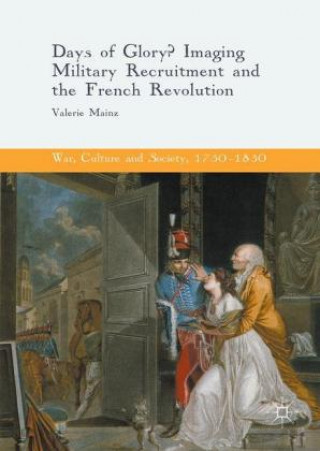
This book examines a range of visual images of§military recruitment to explore changing notions of glory, or of gloire, during the French Revolution.§It raises questions about how this event re-orientated notions of§'citizenship' and of service to ' la§Patrie' . The opening lines of the Marseillaise are grandly declamatory: Allons enfants de la Patrie/le jour de§gloire est arrivé! or, in English: Arise, children of the Homeland/The day of§glory has arrived! What do these words mean in their later§eighteenth-century French context? What was gloire and how was it changed by the revolutionary process? This§military song, later adopted as the national anthem, represents a deceptively§unifying moment of collective engagement in the making of the modern French§nation. Valerie Mainz questions this through a close study of visual imagery§dealing with the issue of military recruitment. From neoclassical painting to popular§prints, such images typically dealt with the shift from civilian to soldier,§focusing on how men, and not women, were called to serve the Homeland.§


Informatie over het boek
Engels
Categorieën

Geef dit boek vandaag nog cadeau
Dat gaat heel eenvoudig
1 Voeg het boek toe aan je winkelwagentje en selecteer Als cadeau bezorgen 2 Je krijgt van ons per omgaand een voucher 3 Het boek wordt bezorgd op het adres van de ontvangerDit vind je misschien ook interessant






 /
Gebonden (paperback)
10.36
€
/
Gebonden (paperback)
10.36
€