Contact
 Hoe winkelen bij ons werkt
Bezorging
Winkelgids
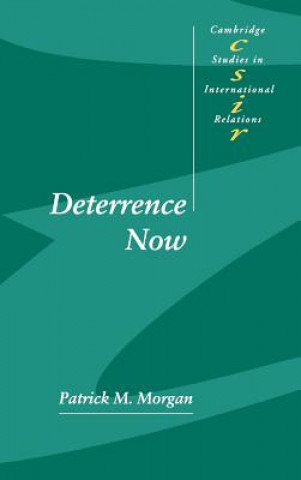
Deterrence Now
 Engels
 363 b
363 b
Retourneren binnen 30 dagen
Klanten kochten ook

 /
/
 Gebonden (paperback)
 20.23
€
20.23
€








 /
Gebonden (paperback)
14.36
€
/
Gebonden (paperback)
14.36
€


 /
Gebonden (paperback)
42.79
€
/
Gebonden (paperback)
42.79
€


Patrick Morgan's authoritative study revisits the place of deterrence after the Cold War. By assessing and questioning the state of modern deterrence theory, particularly under conditions of nuclear proliferation, Morgan argues that there are basic flaws in the design of the theory that ultimately limits its utility. Given the probable patterns of future international politics, he suggests that greater attention be paid to 'general' deterrence as opposed to 'immediate' deterrence and to examining the deterrent capabilities of collective actors such as NATO and the UN Security Council. Finally he contends that the revolution in military affairs can promote less reliance on deterrence by retaliatory threats, support better collective management of peace and security and permit us to outgrow nuclear and other weapons of mass destruction. This new major work builds upon Patrick Morgan's landmark book, Deterrence (1983).


Informatie over het boek
Engels
Categorieën

Geef dit boek vandaag nog cadeau
Dat gaat heel eenvoudig
1 Voeg het boek toe aan je winkelwagentje en selecteer Als cadeau bezorgen 2 Je krijgt van ons per omgaand een voucher 3 Het boek wordt bezorgd op het adres van de ontvangerDit vind je misschien ook interessant
 /
Gebonden (paperback)
20.93
€
/
Gebonden (paperback)
20.93
€
 /
Gebonden (paperback)
50.58
€
/
Gebonden (paperback)
50.58
€



 /
Gebonden (paperback)
17.80
€
/
Gebonden (paperback)
17.80
€



 /
Gebonden (paperback)
102.99
€
/
Gebonden (paperback)
102.99
€






 /
Gebonden (harde band)
154.39
€
/
Gebonden (harde band)
154.39
€