
 Contact
 Hoe winkelen bij ons werkt
Bezorging
Winkelgids
 Engels
 371 b
371 b
Retourneren binnen 30 dagen
Klanten kochten ook

 /
/
 Gebonden (paperback)
 71.12
€
71.12
€
 Gebonden (harde band)
19.21
€
Gebonden (harde band)
19.21
€

 /
Gebonden (paperback)
47.24
€
/
Gebonden (paperback)
47.24
€
 /
Gebonden (paperback)
14.16
€
/
Gebonden (paperback)
14.16
€






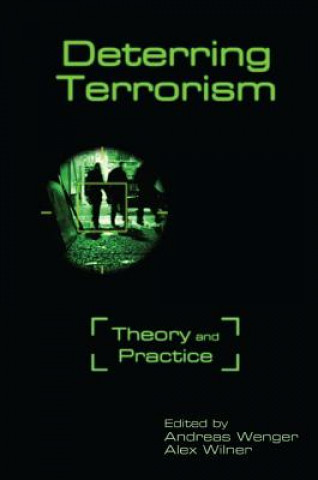
During the Cold War, deterrence theory was the cornerstone of U.S. foreign policy. Following the 9/11 terrorist attacks, however, popular wisdom dictated that terrorist organizations and radical fanatics could not be deterredOCoand governments shifted their attention to combating terrorism rather than deterring it. This book challenges that prevailing assumption and offers insight as to when and where terrorism can be deterred. It first identifies how and where theories of deterrence apply to counterterrorism, highlighting how traditional and less-traditional notions of deterrence can be applied to evolving terrorist threats. It then applies these theoretical propositions to real-world threats to establish the role deterrence has within a dynamic counterterrorism strategyOCoand to identify how metrics can be created for measuring the success of terrorism deterrence strategies. In sum, it provides a foundation for developing effective counterterrorism policies to help states contain or curtail the terrorism challenges they face.


Informatie over het boek
Engels

Geef dit boek vandaag nog cadeau
Dat gaat heel eenvoudig
1 Voeg het boek toe aan je winkelwagentje en selecteer Als cadeau bezorgen 2 Je krijgt van ons per omgaand een voucher 3 Het boek wordt bezorgd op het adres van de ontvangerDit vind je misschien ook interessant
 /
Gebonden (paperback)
48.96
€
/
Gebonden (paperback)
48.96
€
 /
Gebonden (paperback)
43.90
€
/
Gebonden (paperback)
43.90
€







 /
Gebonden (harde band)
154.39
€
/
Gebonden (harde band)
154.39
€

 /
Gebonden (harde band)
142.35
€
/
Gebonden (harde band)
142.35
€


 /
Gebonden (paperback)
71.12
€
/
Gebonden (paperback)
71.12
€
 /
Gebonden (paperback)
51.69
€
/
Gebonden (paperback)
51.69
€
 /
Gebonden (harde band)
146.29
€
/
Gebonden (harde band)
146.29
€
 /
Gebonden (paperback)
56.04
€
/
Gebonden (paperback)
56.04
€
 /
Gebonden (harde band)
154.39
€
/
Gebonden (harde band)
154.39
€