
 Contact
 Hoe winkelen bij ons werkt
Bezorging
Winkelgids
 Engels
 274 b
274 b
Retourneren binnen 30 dagen
Klanten kochten ook





 /
/
 Gebonden (paperback)
 24.07
€
24.07
€

 /
Gebonden (paperback)
17.09
€
/
Gebonden (paperback)
17.09
€



 /
/
 Kalender
19.61
€
Kalender
19.61
€









 /
Gebonden (paperback)
42.78
€
/
Gebonden (paperback)
42.78
€


 /
Gebonden (paperback)
40.96
€
/
Gebonden (paperback)
40.96
€





 /
Gebonden (paperback)
60.58
€
/
Gebonden (paperback)
60.58
€
 /
Gebonden (paperback)
21.44
€
/
Gebonden (paperback)
21.44
€

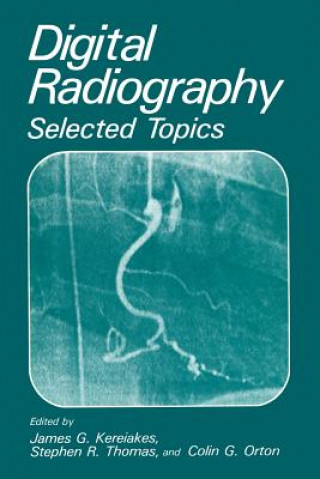
Digital radiography is a general term describing any projection radiological system in which the image exists in digital form at some stage between acquisition and viewing. In an earlier form, radiographic films were dig itized in an attempt to enhance and redisplay information of interest. The field has evolved to its current state, in which X-ray signals are detected electronically, converted to digital form, and processed prior to being recorded and displayed. A primary goal of digital radiography is the re moval of interfering effects from secondary structures in an image, so that clinically significant details can be displayed with enhanced visibility. The achievement of this goal involves many parameters, including con trast agents, subtraction techniques, processing techniques, filtering tech niques, system noise, and quantitative aspects. It is the purpose of this book to present material by noted individuals in the field covering several of the above topics. The authors acknowledge the secretarial and editorial assistance of Mrs. Helen Taylor and the editorial assistance of Mrs. Ruth McDevitt. James G. Kereiakes Stephen R. Thomas Cincinnati, Ohio Colin G. Orton Detroit, Michigan ix Contents 1. DIGITAL RADIOGRAPHY: OVERVIEW B. A. Arnold, 1. G. Kereiakes, and S. R. Thomas 1. Introduction . . . . . . . . . 1 2. Point-Scanned Detector Systems 3 3. Line-Scanned Detector Systems 4 4. Area Detector Systems 5 4.1. Stimulable Phosphors 5 4.2. Selenium Detectors .


Informatie over het boek
Engels

Geef dit boek vandaag nog cadeau
Dat gaat heel eenvoudig
1 Voeg het boek toe aan je winkelwagentje en selecteer Als cadeau bezorgen 2 Je krijgt van ons per omgaand een voucher 3 Het boek wordt bezorgd op het adres van de ontvangerDit vind je misschien ook interessant
 /
Gebonden (paperback)
185.11
€
/
Gebonden (paperback)
185.11
€



 /
Gebonden (paperback)
73.23
€
/
Gebonden (paperback)
73.23
€







 /
Gebonden (paperback)
29.73
€
/
Gebonden (paperback)
29.73
€



 /
Gebonden (paperback)
26.90
€
/
Gebonden (paperback)
26.90
€





 /
Gebonden (paperback)
32.66
€
/
Gebonden (paperback)
32.66
€
 /
Gebonden (paperback)
47.94
€
/
Gebonden (paperback)
47.94
€
Hoi! Ik ben Libroamiko, je boekadviseur.
Hoe kan ik je helpen?