
 Contact
 Hoe winkelen bij ons werkt
Bezorging
Winkelgids
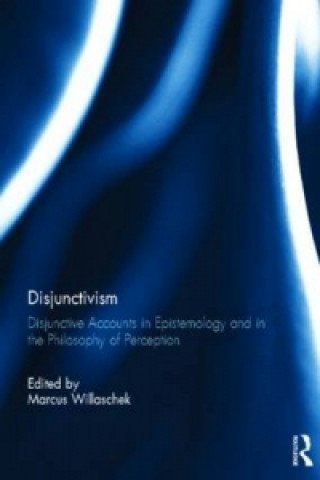
Disjunctivism
 Engels
 549 b
549 b
Retourneren binnen 30 dagen
Klanten kochten ook

 /
/
 Gebonden (paperback)
 9.92
€
9.92
€

















 /
Gebonden (paperback)
26.83
€
/
Gebonden (paperback)
26.83
€

Does perception provide us with direct and unmediated access to the world around us? The so-called ''argument from illusion '' has traditionally been supposed to show otherwise: from the subject''s point of view, perceptual illusions are often indistinguishable from veridical perceptions; hence, perceptual experience, as such, cannot provide us with knowledge of the world, but only with knowledge of how things appear to us. Disjunctive accounts of perceptual experience, first proposed by John McDowell and Paul Snowdon in the early 1980s and at the centre of current debates in the philosophy of perception, have been proposed to block this argument. According to the traditional view, a case of perception and a subjectively indistinguishable illusion or hallucination can exemplify what is fundamentally the same kind of mental state even though they differ in how they relate to the non-mental environment. In contrast, according to the disjunctive account, the concept of perceptual experience should be seen as essentially disjunctive, encompassing (at least) two distinct kinds of mental states, namely genuinely world-involving perceptions and mere appearances.
This book presents seven recent essays on disjunctivism first published in two special issues of Philosophical Explorations: An International Journal for the Philosophy of Mind and Action.


Informatie over het boek
Engels
Categorieën

Geef dit boek vandaag nog cadeau
Dat gaat heel eenvoudig
1 Voeg het boek toe aan je winkelwagentje en selecteer Als cadeau bezorgen 2 Je krijgt van ons per omgaand een voucher 3 Het boek wordt bezorgd op het adres van de ontvangerDit vind je misschien ook interessant

 /
Gebonden (paperback)
8.60
€
/
Gebonden (paperback)
8.60
€




 /
Gebonden (paperback)
12.04
€
/
Gebonden (paperback)
12.04
€


 /
Gebonden (paperback)
14.17
€
/
Gebonden (paperback)
14.17
€

 /
Gebonden (harde band)
206.00
€
/
Gebonden (harde band)
206.00
€
 /
Gebonden (paperback)
154.55
€
/
Gebonden (paperback)
154.55
€


Hoi! Ik ben Libroamiko, je boekadviseur.
Hoe kan ik je helpen?