
 Contact
 Hoe winkelen bij ons werkt
Bezorging
Winkelgids
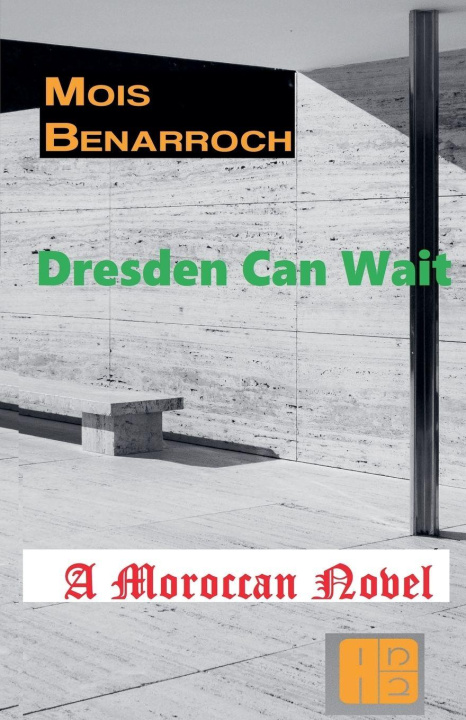
Dresden Can wait
 Engels
 49 b
49 b
Retourneren binnen 30 dagen
Klanten kochten ook



In this bold, genre-shifting novel, Dresden Can wait: A Moroccan novel, Mois Benarroch charts one of the most elusive and fraught terrains of contemporary Hebrew literature: the impossibility-and the necessity-of telling a Moroccan story in Israel. The book is at once memoir, metafiction, essay, lament, and an act of literary resistance. Through a mosaic of narrators spanning three generations, Benarroch reveals a collective wound that refuses to be shaped into a single narrative, a single hero, a single representative voice. What emerges is a radically new form of Mizrahi writing-one that acknowledges fragmentation not as a weakness but as the only truthful container for a history that was forbidden to remember itself.
At its heart, Dresden Can wait: A Moroccan novel wrestles with the paradox of identity in a society that simultaneously erases and demands it. One character, contemplating his turbulent marriage to Anastasia-a woman whose Iraqi Jewish background becomes a mirror for his own Moroccan estrangement-comes to a devastating realization: "everything that happens to a Mizrahi in this country stems from the blow that struck him... on the day he arrived here and was told that it is forbidden to remember, your memory is forbidden." That realization ripples through every chapter, every life, every attempt to construct a self without the language of one's past.
Benarroch's narrators speak French, Spanish, Arabic, Hebrew-sometimes all at once, sometimes none of them fully. Language itself becomes both a wound and a testament: a reminder of the suppressed richness of Moroccan Jewish culture, and a rebellion against the monolingual expectations of the Israeli melting pot. Whether describing French-speaking Jews from Casablanca or Arabic-speaking Jews from the Atlas Mountains, the Dresden Can wait: A Moroccan novel dismantles the myth of the "typical Moroccan," revealing instead a constellation of lived realities and internal fractures. Each voice insists on its right to exist, its right not to be reduced to stereotype or swallowed into a generalized Mizrahi narrative.
Dresden Can wait: A Moroccan novel's brilliance lies in its refusal to settle. An early chapter suggests writing a telenovela about Moroccans in Israel-only to demonstrate the impossibility of choosing which story could stand in for the whole. In another, the narrator examines the sociological pressure to create a "representative" Moroccan protagonist and rejects every option as false, distorted, or colonized by external expectations: the expectations of the hegemonic culture, the expectations of the minority itself, and the expectations of literary theory. As the book progresses, these reflections form a symphony of negations that paradoxically reveal a complete map of Moroccan experience-its fractures, rivalries, pride, linguistic multiplicities, religious textures, and unresolved grief.
This attempt to tell the "other" story-the one erased by homogenization, silenced by assimilationist ideology, and policed by both Left and Right-turns the novel into a profound meditation on literature itself. How does one write without a father figure? How does one narrate a world that has been historically narrated by others-by colonial authorities, by state institutions, by cultural elites? How can the descendants of those who were told not to remember reclaim a narrative voice without becoming an ideological product for consumption?
As Prof. Haviva Pedaya writes in Haaretz:
"The stability of Mois Benharosh within the territory of the place from which he emigrated and in the rich variety of its cultural reference points, and from this, he is in my opinion the greatest of the Andalusian Mediterranean writers operating from within Israel."


Informatie over het boek
Engels
Categorieën

Geef dit boek vandaag nog cadeau
Dat gaat heel eenvoudig
1 Voeg het boek toe aan je winkelwagentje en selecteer Als cadeau bezorgen 2 Je krijgt van ons per omgaand een voucher 3 Het boek wordt bezorgd op het adres van de ontvangerDit vind je misschien ook interessant


Hoi! Ik ben Libroamiko, je boekadviseur.
Hoe kan ik je helpen?