
 Contact
 Hoe winkelen bij ons werkt
Bezorging
Winkelgids
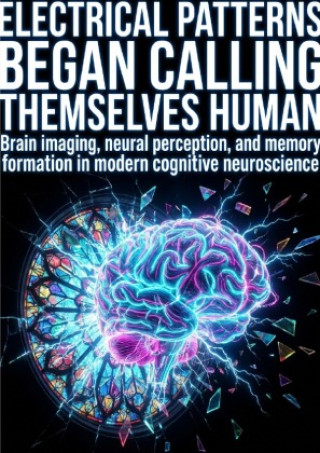
Electrical Patterns Began Calling Themselves Human
Brain imaging, neural perception, and memory formation in modern cognitive neuroscience.DE
 Engels
 91 b
91 b
 Nieuw
Nieuw
Retourneren binnen 30 dagen

The human mind once appeared separate from the machinery of the body. Modern neuroscience has steadily dismantled that assumption by revealing how thought, memory, and perception emerge from measurable physical processes inside the brain. Consciousness increasingly resembles activity rather than mystery.This book examines the scientific foundations of cognitive neuroscience through recent advances in brain imaging and neural mapping. Functional scans, electrophysiological studies, and computational models allow researchers to identify physical networks associated with visual perception, memory consolidation, and emotional response. Conscious experience appears less as a singular phenomenon than as coordinated activity distributed across interacting neural systems.The narrative also follows the growing influence of materialist theories of mind. Rather than treating consciousness as evidence of a separate soul or metaphysical essence, many scientists now interpret awareness as a byproduct of biological computation. The implications extend far beyond laboratories. Legal systems, psychiatric medicine, and ethical debates increasingly confront evidence suggesting that human decision-making may be more neurologically constrained than previously believed.The history of consciousness research therefore becomes part of a larger question about whether human identity can remain philosophically stable once the brain is understood as physical infrastructure alone.


Informatie over het boek
Engels

Geef dit boek vandaag nog cadeau
Dat gaat heel eenvoudig
1 Voeg het boek toe aan je winkelwagentje en selecteer Als cadeau bezorgen 2 Je krijgt van ons per omgaand een voucher 3 Het boek wordt bezorgd op het adres van de ontvangerHoi! Ik ben Libroamiko, je boekadviseur.
Hoe kan ik je helpen?