
 Contact
 Hoe winkelen bij ons werkt
Bezorging
Winkelgids
Electronic Scanned Array Design
 Engels
 334 b
334 b
Retourneren binnen 30 dagen
Klanten kochten ook



 /
/
 Gebonden (paperback)
 39.29
€
39.29
€




 /
Gebonden (paperback)
26.63
€
/
Gebonden (paperback)
26.63
€

 /
Gebonden (paperback)
13.56
€
/
Gebonden (paperback)
13.56
€


 /
Gebonden (paperback)
12.95
€
/
Gebonden (paperback)
12.95
€

 /
Gebonden (paperback)
68.56
€
/
Gebonden (paperback)
68.56
€



 /
/
 Audio cd
9.00
€
Audio cd
9.00
€


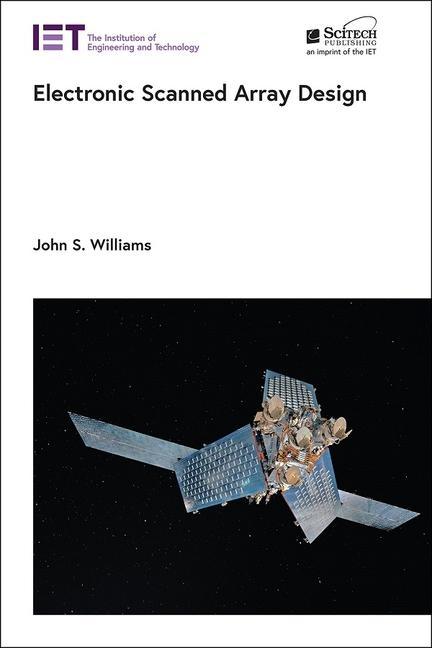
Electronic Scanned Array Design covers the fundamental principles of ESA antennas including basic design approaches and inherent design limitations. These insights enable better appreciation of existing and planned ESA systems including their application to earth observation. The material describes general design principles of aperture antennas applied to the specific case of ESA design.
System applications are discussed to set the framework for requirements allocation and flowdown. Specific examples are cited throughout to relate theory to practice. The book begins by introducing the concept of electronic scanned arrays, giving a brief history of the technology and outlining its scope and applications. Further chapters cover antenna principles; synthetic arrays; antenna figures of merit; mutual coupling effects; errors and tolerances; grating lobes; thinned arrays; beam width and sidelobes; beam shaping and spoiling; reflector applications; design practice; radiating elements; T/R modules; assembly, packaging, power and thermal management; technology base and cost; and ESAs in space. The final chapter offers a comparison between an ESA and a reflector, exploring their benefits, detriments and design trades.
The book will be invaluable for radar and antenna engineers and researchers, and advanced students studying ESA design.


Informatie over het boek
Engels

Geef dit boek vandaag nog cadeau
Dat gaat heel eenvoudig
1 Voeg het boek toe aan je winkelwagentje en selecteer Als cadeau bezorgen 2 Je krijgt van ons per omgaand een voucher 3 Het boek wordt bezorgd op het adres van de ontvangerDit vind je misschien ook interessant



 /
Gebonden (paperback)
27.84
€
/
Gebonden (paperback)
27.84
€





 /
Gebonden (paperback)
15.59
€
/
Gebonden (paperback)
15.59
€


 /
Gebonden (paperback)
32.10
€
/
Gebonden (paperback)
32.10
€






 /
Gebonden (paperback)
15.59
€
/
Gebonden (paperback)
15.59
€
 /
Gebonden (harde band)
97.02
€
/
Gebonden (harde band)
97.02
€
 /
Gebonden (harde band)
93.68
€
/
Gebonden (harde band)
93.68
€


Hoi! Ik ben Libroamiko, je boekadviseur.
Hoe kan ik je helpen?