
 Contact
 Hoe winkelen bij ons werkt
Bezorging
Winkelgids
 Engels
 244 b
244 b
Retourneren binnen 30 dagen
Klanten kochten ook



 /
/
 Gebonden (paperback)
 20.35
€
20.35
€



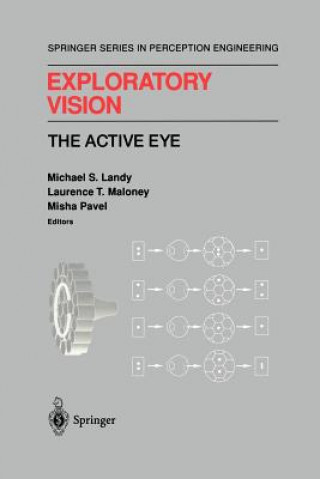
Advances in sensing, signal processing, and computer technology during the past half century have stimulated numerous attempts to design general-purpose ma chines that see. These attempts have met with at best modest success and more typically outright failure. The difficulties encountered in building working com puter vision systems based on state-of-the-art techniques came as a surprise. Perhaps the most frustrating aspect of the problem is that machine vision sys tems cannot deal with numerous visual tasks that humans perform rapidly and effortlessly. In reaction to this perceived discrepancy in performance, various researchers (notably Marr, 1982) suggested that the design of machine-vision systems should be based on principles drawn from the study of biological systems. This "neuro morphic" or "anthropomorphic" approach has proven fruitful: the use of pyramid (multiresolution) image representation methods in image compression is one ex ample of a successful application based on principles primarily derived from the study of biological vision systems. It is still the case, however, that the perfor of computer vision systems falls far short of that of the natural systems mance they are intended to mimic, suggesting that it is time to look even more closely at the remaining differences between artificial and biological vision systems.


Informatie over het boek
Engels

Geef dit boek vandaag nog cadeau
Dat gaat heel eenvoudig
1 Voeg het boek toe aan je winkelwagentje en selecteer Als cadeau bezorgen 2 Je krijgt van ons per omgaand een voucher 3 Het boek wordt bezorgd op het adres van de ontvangerDit vind je misschien ook interessant




 /
Gebonden (paperback)
12.65
€
/
Gebonden (paperback)
12.65
€


Hoi! Ik ben Libroamiko, je boekadviseur.
Hoe kan ik je helpen?