
 Contact
 Hoe winkelen bij ons werkt
Bezorging
Winkelgids
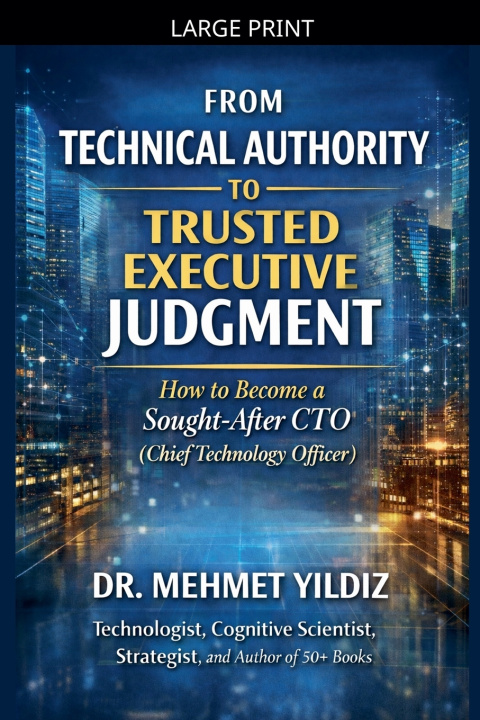
From Technical Authority to Trusted Executive Judgment
How to Become a Sought-After CTO (Chief Technology Officer)
 Engels
 97 b
97 b
 Wordt verwacht
 Nieuw
Nieuw
Tot 30 dagen retourrecht

Many capable technologists reach senior roles with deep technical expertise, strong delivery records, and years of hard-earned experience. I have met and worked with many of them. Yet only a small number become CTOs that founders, boards, and investors actively seek out, rely on, and invite back across multiple organizations. I wrote this book to explain why.
In my experience, becoming a sought-after CTO goes beyond knowing more technologies, frameworks, or tools. It requires judgment under uncertainty, pressure, and incomplete information. At the CTO level, technical certainty is not the constraint. The real challenge is helping organizations make decisions that remain coherent as conditions change.
I wrote this book for experienced technologists, architects, engineering leaders, and aspiring CTOs who sense that the role requires something fundamentally different from senior technical mastery alone. I focus on the natural transition from being valued for answers to being trusted for decision framing, from optimizing systems to preserving optionality, and from personal excellence to organizational clarity.
While my primary audience is experienced technologists and aspiring CTOs, I also wrote this book for HR leaders, executive recruiters, and hiring managers responsible for identifying senior technology leadership. I offer a clearer lens for distinguishing technical excellence from executive-level judgment, and for recognizing the qualities that make a CTO effective, trusted, and sought after.
Throughout the book, I draw on my decades of experience across large enterprises, startups, advisory roles, and board-level engagements. I focus on what is not articulated explicitly: how CTOs influence direction without dominating, how they balance speed with sustainability, how architecture becomes a system of choices rather than a diagram, and how credibility is built through calm, disciplined thinking rather than confidence theater.
Without technology prescriptions, I offer my robust framework called JUDGMENT™. However, I examine and discuss how sought-after CTOs think.
I explain architecture as a decision system, cloud as an operating model, data as a long-term asset, and security as a leadership responsibility. I address emerging technologies such as AI not as inevitabilities, but as domains where timing, evidence, and restraint matter as much as innovation.
I also take the human dimension of the role equally seriously. I explore how CTOs work with strong engineers without undermining them, how they mentor technical leaders to think strategically, and how developer experience usually reveals deeper organizational issues long before metrics do. I examine the emotional demands of the role, including how CTOs are remembered during incidents, crises, and moments of scrutiny.
A dedicated section focuses on fractional and advisory CTO roles, where ambiguity and misalignment can easily undermine impact. I explain how decision rights, boundaries, cadence, and exit criteria determine whether these engagements create leverage or confusion. I also address the CTO's role at the board and investor level, including how to translate technology risk into business language, support fundraising responsibly, and recognize when an organization has outgrown a fractional model.
Throughout the book, I return to one central theme: trust. Not trust built through visibility or self-promotion, but trust built naturally through consistency, clarity, and proportion. Trust that compounds over time and leads to repeat engagements, long-term relationships, and a reputation that outlives any single role or system.


Informatie over het boek
Engels
Categorieën

Geef dit boek vandaag nog cadeau
Dat gaat heel eenvoudig
1 Voeg het boek toe aan je winkelwagentje en selecteer Als cadeau bezorgen 2 Je krijgt van ons per omgaand een voucher 3 Het boek wordt bezorgd op het adres van de ontvangerHoi! Ik ben Libroamiko, je boekadviseur.
Hoe kan ik je helpen?