
 Contact
 Hoe winkelen bij ons werkt
Bezorging
Winkelgids
Grail -Two Studies
 Engels
 72 b
72 b
Retourneren binnen 30 dagen
Klanten kochten ook













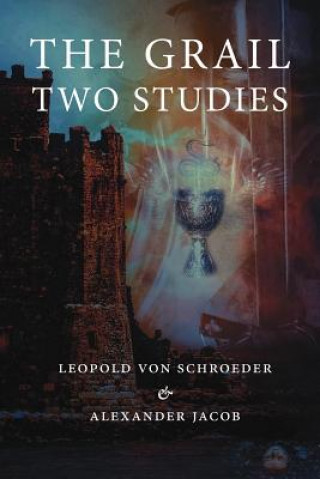
A proper understanding of the significance of the cultic object called the Holy Grail has eluded most scholars who have confined their research to western European literary and cultural sources, especially since the originally Celtic story of the Holy Grail underwent numerous bewildering metamorphoses in the romances of the Middle Ages. It was the Indologist Leopold von Schroeder's reading of the Grail story (1910) in the light of his knowledge of Indic mythology that first achieved a dramatic expansion of the field of Holy Grail scholarship. The only other scholar who developed a comprehensive comparative mythological study of the Grail was perhaps Julius Evola in his Il Mistero del Graal e la Tradizione Ghibellina dell'Impero (1937). Schroeder's fascinating elucidation of some of the key symbols of the Grail legends using his knowledge of ancient Indian literature is amplified by Alexander Jacob's reconstruction of the cosmological basis of these symbols and his analysis of the solar rituals that characterized the diverse yet related religions of the ancient Indo-Europeans.


Informatie over het boek
Engels

Geef dit boek vandaag nog cadeau
Dat gaat heel eenvoudig
1 Voeg het boek toe aan je winkelwagentje en selecteer Als cadeau bezorgen 2 Je krijgt van ons per omgaand een voucher 3 Het boek wordt bezorgd op het adres van de ontvangerDit vind je misschien ook interessant



 /
/
 Gebonden (paperback)
 10.32
€
10.32
€







Hoi! Ik ben Libroamiko, je boekadviseur.
Hoe kan ik je helpen?