
 Contact
 Hoe winkelen bij ons werkt
Bezorging
Winkelgids
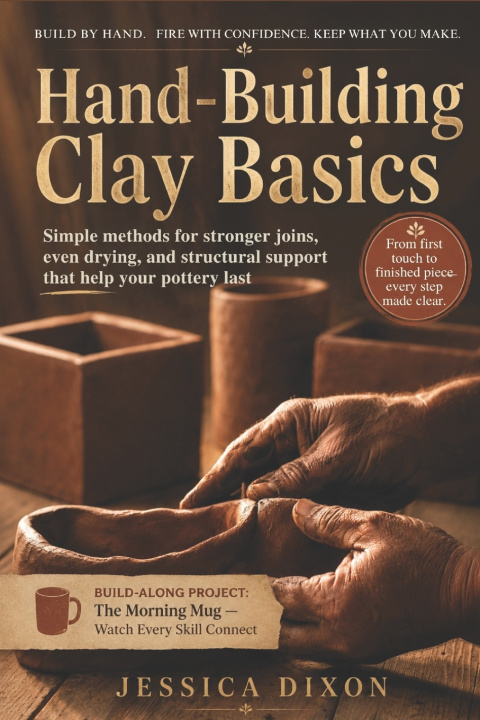
Hand-Building Clay Basics
Simple methods for stronger joins, even drying, and structural support that help your pottery last
 Engels
 32 b
32 b
 Nieuw
Nieuw
Tot 30 dagen retourrecht

Finally, a Hand-Building Book That Explains What Actually Matters
You've shaped a mug you love. The handle feels right in your palm. You dry it carefully. Then a crack appears where the handle meets the body, or the base warps, or the whole piece slumps in the kiln. Nobody told you why, and now you're holding fired evidence that something went wrong.
This book exists so that stops happening.
Hand-Building Clay Basics walks you through the quiet, invisible skills that most instruction rushes past. The ones that determine whether your work survives: how to join clay so it stays joined, how to compress surfaces so they resist cracking, how to manage moisture so drying doesn't destroy what you built, and how to plan internal supports before gravity makes the decisions for you.
What makes this book different
Most pottery books spend half their pages on wheel throwing or glaze chemistry you don't need yet. This one stays with you at the table, working the clay by hand, from the first pinch pot through the moment you open the kiln and see what held.
Inside, you'll find:
How to read clay moisture by touch so you stop fighting material that's too wet or too dry
A wedging method that fits your body and your space, not a production studio
Why score-and-slip works at the particle level, and why just chanting the phrase isn't enough
Compression techniques that interlock clay layers so rims, bases, and joins hold through firing
A drying approach with real timing cues, not just "dry slowly" and hope
How to build soft supports from everyday materials and plan them into your design
Surface finishing that strengthens your form, not just decorates it
What actually happens inside the kiln, explained without a chemistry degree
A complete build-along project: The Morning Mug, start to finish
How to read cracks as clues instead of personal failures?
This book is written for the absolute beginner and the frustrated returner. You don't need a wheel. You don't need a studio. You need working hands, a surface you can get dirty, and someone to explain what the clay is trying to tell you.
At the end, I've included an optional bonus section, a full build-along project, for readers who want to see every skill connect in one complete piece. The main book stands entirely on its own.
If you're tired of losing work to preventable mistakes and ready to understand what's happening in the clay, this is the book that meets you where you are.


Informatie over het boek
Engels
