
 Contact
 Hoe winkelen bij ons werkt

Bezorging
Winkelgids
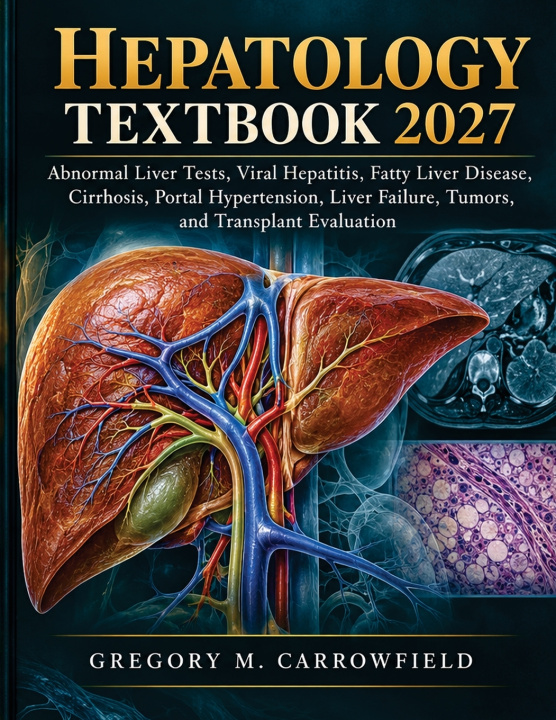
Hepatology Textbook 2027
Abnormal Liver Tests, Viral Hepatitis, Fatty Liver Disease, Cirrhosis, Portal Hypertension, Liver Failure, Tumors, and Transplant Evaluation
 Engels
 454 b
 Wordt verwacht
 Nieuw
Tot 30 dagen retourrecht

Liver disease does not always announce itself through obvious symptoms. Sometimes, the first indication is a laboratory result that appears only slightly abnormal. At other times, the presentation is already complicated by bleeding, fluid accumulation, or declining hepatic function.
Understanding what connects these findings is central to hepatology.
HEPATOLOGY TEXTBOOK 2027 examines the clinical and scientific foundations of liver disease, from the interpretation of abnormal biochemical findings to the recognition, assessment, and management of advanced hepatic disorders.
The textbook brings together major areas of liver medicine, including:
Abnormal Liver Tests: Understanding patterns of hepatocellular injury, cholestasis, and altered hepatic function, and their significance in clinical assessment.
Viral Hepatitis and Fatty Liver Disease: Examining infectious and metabolic causes of hepatic injury, their clinical manifestations, and disease progression.
Cirrhosis and Portal Hypertension: Exploring the consequences of chronic hepatic injury, altered portal circulation, and complications associated with advanced disease.
Liver Failure: Considering the physiological disturbances, clinical complications, and management priorities that accompany serious hepatic dysfunction.
Hepatic Tumors: Understanding the assessment of focal liver abnormalities and the considerations involved in distinguishing benign from malignant disease.
Transplant Evaluation: Examining the clinical factors and decision-making principles surrounding assessment for liver transplantation.
Intended for medical students, internal medicine residents, gastroenterology and hepatology trainees, physicians, and healthcare professionals studying hepatic disorders, the book provides a broad perspective on the relationship between disease mechanisms, diagnostic findings, and clinical management.
Particular emphasis is placed on interpreting liver disease as a developing clinical process. Laboratory changes, underlying causes, structural abnormalities, and complications must be understood together rather than treated as unrelated findings.
From the first unexplained alteration in liver chemistry to the complex decisions surrounding advanced hepatic disease, the central challenge remains the same: understanding what the findings reveal, how the condition is progressing, and what the clinical evidence supports.


Informatie over het boek
Engels

Geef dit boek vandaag nog cadeau
Dat gaat heel eenvoudig
1 Voeg het boek toe aan je winkelwagentje en selecteer Als cadeau bezorgen 2 Je krijgt van ons per omgaand een voucher 3 Het boek wordt bezorgd op het adres van de ontvangerHoi! Ik ben Libroamiko, je boekadviseur.
Hoe kan ik je helpen?