Contact
 Hoe winkelen bij ons werkt
Bezorging
Winkelgids
Hidden Hands
 Engels
 132 b
132 b
Retourneren binnen 30 dagen
Klanten kochten ook

 /
/
 Gebonden (harde band)
 154.80
€
154.80
€

 /
Gebonden (paperback)
4.94
€
/
Gebonden (paperback)
4.94
€







 /
Gebonden (paperback)
17.47
€
/
Gebonden (paperback)
17.47
€


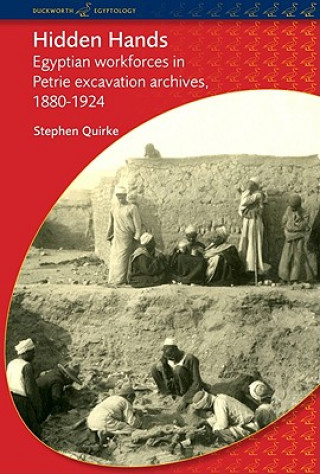
Despite major movements for change, in practice archaeologists still pursue the past to the exclusion of the present inhabitants of archaeological landscapes. Archaeological archives hold a key to the formation of archaeology as a separate study, but they may be overlooked in current debates on ethics in archaeology and anthropology. This study focuses on the great archive that records the work of Flinders Petrie in Egypt, first in 1880-1882 under a nationalist government, and then during the English military occupation that lasted from 1882 until after his death in 1942. The archive brings to life the main Egyptian supervisors who enabled Petrie to function as an archaeologist, while payroll lists record the names of hundreds more men and children on the full labour force. None of these Egyptians have received recognition as an archaeologist in history-writing, foreign or Egyptian. This archival ground offers a new open resource to those within Egypt and elsewhere opposed to the neo-colonial regime of the disciplines.


Informatie over het boek
Engels

Geef dit boek vandaag nog cadeau
Dat gaat heel eenvoudig
1 Voeg het boek toe aan je winkelwagentje en selecteer Als cadeau bezorgen 2 Je krijgt van ons per omgaand een voucher 3 Het boek wordt bezorgd op het adres van de ontvangerDit vind je misschien ook interessant
 /
Gebonden (harde band)
73.15
€
/
Gebonden (harde band)
73.15
€

 /
Gebonden (paperback)
12.32
€
/
Gebonden (paperback)
12.32
€



 /
Gebonden (paperback)
12.62
€
/
Gebonden (paperback)
12.62
€
 /
Gebonden (paperback)
14.84
€
/
Gebonden (paperback)
14.84
€





 /
Gebonden (paperback)
16.66
€
/
Gebonden (paperback)
16.66
€