
 Contact
 Hoe winkelen bij ons werkt
Bezorging
Winkelgids
High Frequency Techniques: An Introduction to RF and Microwave Design and Computer Simulation
 Engels
 504 b
504 b
Tot 30 dagen retourrecht
Klanten kochten ook





















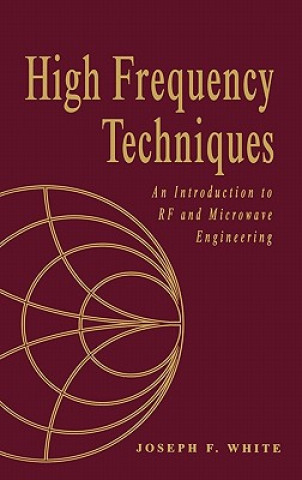
A practical guide for today's wireless engineer High Frequency Techniques: An Introduction to RF and Microwave Engineering is a clearly written classical circuit and field theory text illustrated with modern computer simulation software. The book's ten chapters cover: The origins and current uses of wireless transmission A review of AC analysis, Kirchhoff's laws, RLC elements, skin effect, and introduction to the use of computer simulation software Resonators, Q definitions, and Q-based impedance matching Transmission lines, waves, VSWR, reflection phenomena, Fano's reflection bandwidth limits, telegrapher, and impedance transformation equations Development and in-depth use of the Smith Chart Matrix algebra with Z, Y, ABCD, S, and T matrix applications An unusually thorough introduction to electromagnetic field theory, step-by-step development of vector calculus, Maxwell's equations, waveguides, propagation, and antennas Backward wave, branch line, rat race and Wilkinson couplers, impedance measurements, and detailed even and odd mode analysis Filter designs for Butterworth, Chebyshev, Bessel and elliptic responses, Kuroda's identities, Richards's transformation, and computer optimized designs Transistor amplifier design using Unilateral Gain, Simultaneous Match, Available Gain and Operating Gain approaches, insuring stability, cascading stages, broadbanding, noise theory, and intermodulation effects Using informal language, High Frequency Techniques takes the reader step-by- step through RF and microwave theory and design, providing a lasting practical reference for the practicing wireless engineer. An Instructor's Manual presenting detailed solutions to all the problems in the book is available from the Wiley editorial department.


Informatie over het boek
Engels

Geef dit boek vandaag nog cadeau
Dat gaat heel eenvoudig
1 Voeg het boek toe aan je winkelwagentje en selecteer Als cadeau bezorgen 2 Je krijgt van ons per omgaand een voucher 3 Het boek wordt bezorgd op het adres van de ontvangerDit vind je misschien ook interessant
 /
/
 Gebonden (paperback)
 167.67
€
167.67
€


 /
Gebonden (harde band)
90.41
€
/
Gebonden (harde band)
90.41
€
 /
Gebonden (paperback)
18.40
€
/
Gebonden (paperback)
18.40
€


 /
Gebonden (paperback)
42.97
€
/
Gebonden (paperback)
42.97
€

 /
Gebonden (paperback)
6.26
€
/
Gebonden (paperback)
6.26
€


 /
Gebonden (harde band)
23.25
€
/
Gebonden (harde band)
23.25
€

 /
Gebonden (paperback)
25.07
€
/
Gebonden (paperback)
25.07
€



 /
Gebonden (paperback)
24.06
€
/
Gebonden (paperback)
24.06
€


 /
Gebonden (paperback)
22.34
€
/
Gebonden (paperback)
22.34
€


 /
Gebonden (harde band)
88.79
€
/
Gebonden (harde band)
88.79
€
Hoi! Ik ben Libroamiko, je boekadviseur.
Hoe kan ik je helpen?