Contact
 Hoe winkelen bij ons werkt
Bezorging
Winkelgids
 Engels
 682 b
682 b
Retourneren binnen 30 dagen
Klanten kochten ook










 /
/
 Kalender
 18.71
€
18.71
€



 /
/
 Gebonden (paperback)
57.86
€
Gebonden (paperback)
57.86
€
 /
Gebonden (paperback)
103.60
€
/
Gebonden (paperback)
103.60
€

 /
Gebonden (paperback)
29.13
€
/
Gebonden (paperback)
29.13
€





 /
Gebonden (paperback)
42.79
€
/
Gebonden (paperback)
42.79
€

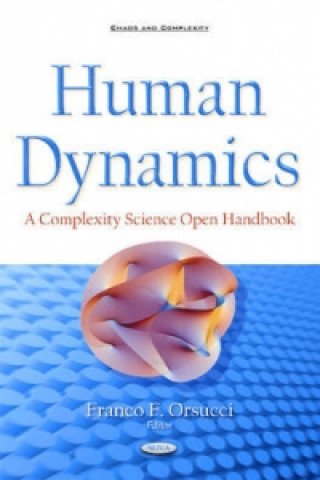
The classical Roman poet, Titus Lucretius Carus (c. 99 BC c. 55 BC), described the clinamen, or swerve, as an occurrence that we now call singularity, also popularised as the butterfly effect. His poem, De Rerum Natura (On the Nature of Things), reminds us that an awareness of the intrinsic complexity of natural dynamics has been present for a very long times in human culture (Lucretius, 54BC in 1971; Greenblatt, 2011). It is quite recently, however, that complexity has become a suitable scientific approach. The meta-paradigm of Complexity Science crosses over different disciplines, from physics and mathematics to biology, social sciences, and now psychotherapy. Complexity Science is the scientific toolbox for complex dynamical systems. This definition comprehends a series of sub-disciplines: dissipative systems, cellular automata, fractals, catastrophes, self-organisation, self-organised criticality, chaos theory, fuzzy logic, stochastic resonance, cellular automata, neural networks, genetic algorithms, and others.


Informatie over het boek
Engels

Geef dit boek vandaag nog cadeau
Dat gaat heel eenvoudig
1 Voeg het boek toe aan je winkelwagentje en selecteer Als cadeau bezorgen 2 Je krijgt van ons per omgaand een voucher 3 Het boek wordt bezorgd op het adres van de ontvangerDit vind je misschien ook interessant


 /
Gebonden (paperback)
7.68
€
/
Gebonden (paperback)
7.68
€
 /
Gebonden (paperback)
6.77
€
/
Gebonden (paperback)
6.77
€

 /
Gebonden (paperback)
12.64
€
/
Gebonden (paperback)
12.64
€
 /
Gebonden (paperback)
14.16
€
/
Gebonden (paperback)
14.16
€