Contact
 Hoe winkelen bij ons werkt
Bezorging
Winkelgids
Human Web
 Engels
 75 b
75 b
Retourneren binnen 30 dagen
Klanten kochten ook







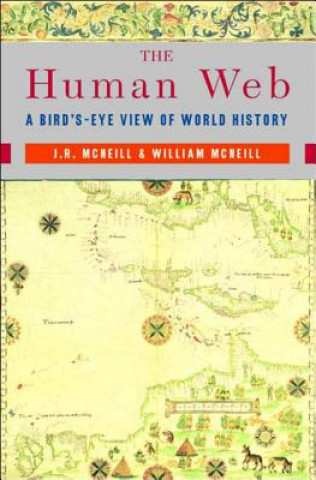
World-historical questions such as these, the subjects of major works by Jared Diamond, David Landes, and others, are now of great moment as global frictions increase. In a spirited and original contribution to this quickening discussion, two renowned historians, father and son, explore the webs that have drawn humans together in patterns of interaction and exchange, cooperation and competition, since earliest times. Whether small or large, loose or dense, these webs have provided the medium for the movement of ideas, goods, power, and money within and across cultures, societies, and nations. From the thin, localized webs that characterized agricultural communities twelve thousand years ago, through the denser, more interactive metropolitan webs that surrounded ancient Sumer, Athens, and Timbuktu, to the electrified global web that today envelops virtually the entire world in a maelstrom of cooperation and competition, J. R. McNeill and William H. McNeill show human webs to be a key component of world history and a revealing framework of analysis. Avoiding any determinism, environmental or cultural, the McNeills give us a synthesizing picture of the big patterns of world history in a rich, open-ended, concise account.


Informatie over het boek
Engels

Geef dit boek vandaag nog cadeau
Dat gaat heel eenvoudig
1 Voeg het boek toe aan je winkelwagentje en selecteer Als cadeau bezorgen 2 Je krijgt van ons per omgaand een voucher 3 Het boek wordt bezorgd op het adres van de ontvangerDit vind je misschien ook interessant
 /
/
 Gebonden (harde band)
 34.45
€
34.45
€












 /
Gebonden (paperback)
54.36
€
/
Gebonden (paperback)
54.36
€











 /
Gebonden (harde band)
40.41
€
/
Gebonden (harde band)
40.41
€
 /
Gebonden (paperback)
42.23
€
/
Gebonden (paperback)
42.23
€