
 Contact
 Hoe winkelen bij ons werkt
Bezorging
Winkelgids
 Engels
 88 b
88 b
 Nieuw
Nieuw
Tot 30 dagen retourrecht

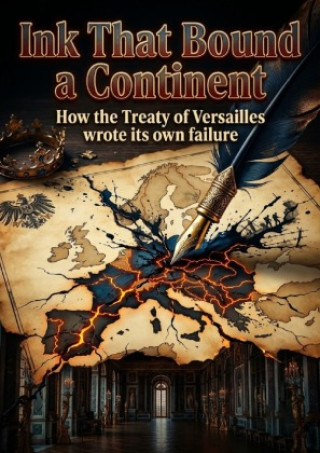
The armistice had barely silenced the guns when diplomats in Paris began drafting the document that would define a generation. Between January and June 1919, they wrote clauses meant to prevent war forever, yet within twenty years those same clauses had become the rationale for a second global conflict. This book examines the Treaty of Versailles not as a single event but as a process of institutional design failure, where economic reparations, territorial redrawing, and the war guilt clause created a mechanical structure that could not absorb the political pressures it generated. It traces how the treaty's architects, operating under time pressure and competing national interests, built a settlement that satisfied no one sufficiently and punished Germany in ways that made democratic governance nearly impossible. The narrative moves through the key negotiations, the domestic reactions across Europe, and the slow unraveling of enforcement mechanisms during the 1920s. What emerges is a portrait of a peace that was neither Carthaginian nor conciliatory, but fatally inconsistent. The book closes by considering how the treaty's structural flaws became embedded in the institutional DNA of twentieth-century Europe, influencing everything from the League of Nations to postwar reconstruction after 1945. For readers seeking to understand why peace settlements fail, the Treaty of Versailles remains the most instructive case in modern history.


Informatie over het boek
Engels

Geef dit boek vandaag nog cadeau
Dat gaat heel eenvoudig
1 Voeg het boek toe aan je winkelwagentje en selecteer Als cadeau bezorgen 2 Je krijgt van ons per omgaand een voucher 3 Het boek wordt bezorgd op het adres van de ontvangerHoi! Ik ben Libroamiko, je boekadviseur.
Hoe kan ik je helpen?