
 Contact
 Hoe winkelen bij ons werkt
Bezorging
Winkelgids
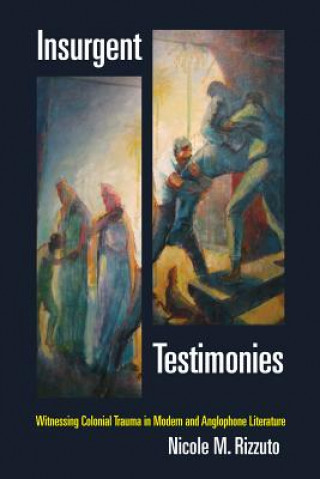
Insurgent Testimonies
Witnessing Colonial Trauma in Modern and Anglophone Literature
 Engels
 85 b
85 b
Tot 30 dagen retourrecht
Klanten kochten ook



 /
/
 Gebonden (paperback)
 37.35
€
37.35
€




 /
Gebonden (paperback)
88.07
€
/
Gebonden (paperback)
88.07
€

 /
Gebonden (harde band)
198.62
€
/
Gebonden (harde band)
198.62
€


 /
Gebonden (paperback)
24.19
€
/
Gebonden (paperback)
24.19
€


During the second half of the nineteenth century and the first half of the twentieth, insurgencies erupted in imperial states and colonies around the world, including Britain's. At the time of such conflicts, England was confronting social and political unrest within its borders, undergoing cultural and economic shifts accompanying the growth and decline of empire, participating in geopolitical realignments of Europe and the global "East" and "West," and fighting in world wars. Britain relied on legislation, trials, changes in policing, and extraordinary techniques such as indefinite detention and torture to restore or maintain order, while also attempting to protect cherished narratives of national cohesion and imperial benevolence that would secure it from charges of totalitarianism and barbarism leveled at other imperial powers. This book examines how British, Caribbean, and African writings depict these historical events and their aftereffects as traumas that compromise such narratives. Viewed together, the writing of Ukrainian-born Joseph Conrad, Anglo-Irish Rebecca West, Jamaicans H. G. de Lisser and V. S. Reid, and Kenyan Ngugi wa Thiong'o testify to contested events in colonial modernity in ways that question premises underlying approaches to trauma in modernist studies and trauma and memory studies, and invite us to reassess divisions and classifications in literary studies that generate such categories as modernist, colonial, postcolonial, national, and world literatures. Critics working on trauma in modernist studies and those working in trauma and memory studies have tended to focus on the effects of what are often considered the greatest ruptures of the twentieth century, the two world wars. Departing from tenets of modernist studies, which centralizes the impact of World War I on the formation of English modernism, and from methods in the field of trauma and memory studies, which long traced the impact of World War II and the Shoah on continental European literary forms, I contend that acute as well as chronic disruptions to imperial and national power and the legal and extra-legal responses they inspired shape the formal practices of literatures from the modernist, colonial, and postcolonial periods.


Informatie over het boek
Engels

Geef dit boek vandaag nog cadeau
Dat gaat heel eenvoudig
1 Voeg het boek toe aan je winkelwagentje en selecteer Als cadeau bezorgen 2 Je krijgt van ons per omgaand een voucher 3 Het boek wordt bezorgd op het adres van de ontvangerDit vind je misschien ook interessant

 /
Gebonden (paperback)
26.21
€
/
Gebonden (paperback)
26.21
€



 /
Gebonden (harde band)
198.83
€
/
Gebonden (harde band)
198.83
€
Hoi! Ik ben Libroamiko, je boekadviseur.
Hoe kan ik je helpen?