Contact
 Hoe winkelen bij ons werkt
Bezorging
Winkelgids
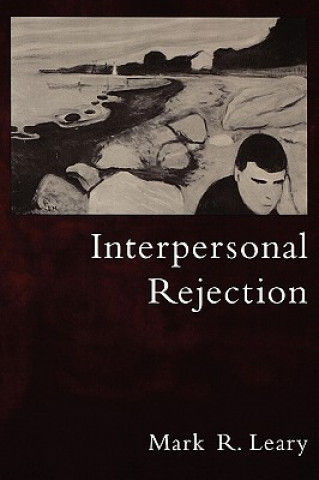
Interpersonal Rejection
 Engels
 146 b
146 b
Retourneren binnen 30 dagen
Klanten kochten ook











 /
/
 Gebonden (harde band)
 31.77
€
31.77
€








 /
Gebonden (paperback)
10.61
€
/
Gebonden (paperback)
10.61
€




 /
Gebonden (paperback)
52.91
€
/
Gebonden (paperback)
52.91
€



 /
Gebonden (paperback)
15.57
€
/
Gebonden (paperback)
15.57
€

Interpersonal rejection ranks among the most potent and distressing events that people experience. Romantic rejection, ostracism, stigmatisation, job termination, and other kinds of rejections have the power to compromise the quality of people's lives. As a result, people are highly motivated to avoid social rejection, and, indeed, much of human behaviour appears to be designed to avoid such experiences. Yet, despite the widespread effects of real, anticipated, and even imagined rejections, psychologists have devoted only passing attention to the topic, and the research on rejection has been scattered throughout a number of psychological subspecialties (e.g., social, clinical, developmental, personality). In the past few years, however, we have seen a surge of interest in the effects of interpersonal rejection on behavior and emotion. The goal of this book is to pull together the contributions of several scholars, whose work is on the cutting edge of rejection research, providing a scholarly yet readable overview of recent advances in the area. In doing so, it not only provides a look at the current state of the area but also helps to establish the topic of rejection as an identifiable area for future research. Topics covered in the book include: ostracism, unrequited love, betrayal, stigmatisation, rejection sensitivity, rejection and self-esteem, peer rejection in childhood, emotional responses to rejection, and personality moderators of reactions to rejection.


Informatie over het boek
Engels

Geef dit boek vandaag nog cadeau
Dat gaat heel eenvoudig
1 Voeg het boek toe aan je winkelwagentje en selecteer Als cadeau bezorgen 2 Je krijgt van ons per omgaand een voucher 3 Het boek wordt bezorgd op het adres van de ontvangerDit vind je misschien ook interessant









 /
Gebonden (paperback)
10.31
€
/
Gebonden (paperback)
10.31
€
 /
Gebonden (paperback)
13.04
€
/
Gebonden (paperback)
13.04
€



 /
Gebonden (paperback)
14.86
€
/
Gebonden (paperback)
14.86
€
 /
Gebonden (paperback)
20.43
€
/
Gebonden (paperback)
20.43
€