
 Contact
 Hoe winkelen bij ons werkt
Bezorging
Winkelgids
Introduction to Complexity and Complex Systems
 Engels
 779 b
779 b
 Wordt verwacht
 Datum onbekend
Retourneren binnen 30 dagen
Klanten kochten ook

 /
/
 Gebonden (paperback)
 36.65
€
36.65
€

 /
Gebonden (paperback)
87.30
€
/
Gebonden (paperback)
87.30
€
 /
Gebonden (harde band)
67.55
€
/
Gebonden (harde band)
67.55
€


 /
Gebonden (paperback)
16.50
€
/
Gebonden (paperback)
16.50
€




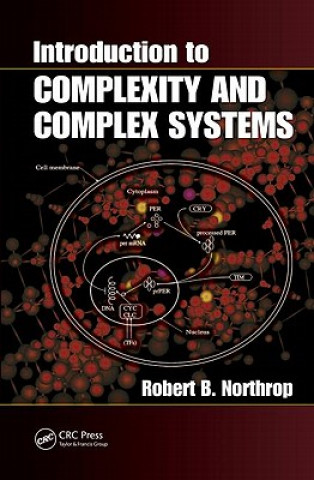
The boundaries between simple and complicated, and complicated and complex system designations are fuzzy and debatable, even using quantitative measures of complexity. However, if you are a biomedical engineer, a biologist, physiologist, economist, politician, stock market speculator, or politician, you have encountered complex systems. Furthermore, your success depends on your ability to successfully interact with and manage a variety of complex systems. In order not to be blindsided by unexpected results, we need a systematic, comprehensive way of analyzing, modeling, and simulating complex systems to predict non-anticipated outcomes.
In its engaging first chapters, the book introduces complex systems, Campbell''s Law, and the Law of Unintended Consequences, and mathematics necessary for conversations in complex systems. Subsequent chapters illustrate concepts via commonly studied biological mechanisms. The final chapters focus on higher-level complexity problems, and introduce complexity in economic systems.
Designed as a reference for biologists and biological engineers, Introduction to Complexity and Complex Systems lends itself to use in a classroom course to introduce advanced students studying biomedical engineering, biophysics, or physiology to complex systems. Engaging and illustrative, this book aids scientists and decision makers in managing biological complexity and complex systems.


Informatie over het boek
Engels

Geef dit boek vandaag nog cadeau
Dat gaat heel eenvoudig
1 Voeg het boek toe aan je winkelwagentje en selecteer Als cadeau bezorgen 2 Je krijgt van ons per omgaand een voucher 3 Het boek wordt bezorgd op het adres van de ontvangerDit vind je misschien ook interessant




 /
Gebonden (paperback)
14.27
€
/
Gebonden (paperback)
14.27
€


 /
Gebonden (paperback)
12.04
€
/
Gebonden (paperback)
12.04
€














 /
Gebonden (harde band)
206.30
€
/
Gebonden (harde band)
206.30
€
 /
Gebonden (paperback)
77.37
€
/
Gebonden (paperback)
77.37
€


Hoi! Ik ben Libroamiko, je boekadviseur.
Hoe kan ik je helpen?