
 Contact
 Hoe winkelen bij ons werkt
Bezorging
Winkelgids
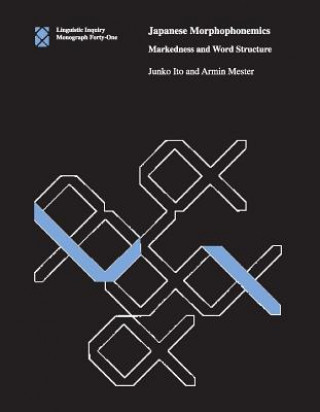
Japanese Morphophonemics
 Engels
 29 b
29 b
Tot 30 dagen retourrecht
Klanten kochten ook



 /
/
 Gebonden (paperback)
 21.44
€
21.44
€

 /
Gebonden (paperback)
4.64
€
/
Gebonden (paperback)
4.64
€


 /
Gebonden (paperback)
32.06
€
/
Gebonden (paperback)
32.06
€





 /
Gebonden (paperback)
52.90
€
/
Gebonden (paperback)
52.90
€



 /
Gebonden (paperback)
66.65
€
/
Gebonden (paperback)
66.65
€



 /
Gebonden (paperback)
46.12
€
/
Gebonden (paperback)
46.12
€

 /
Gebonden (paperback)
10.81
€
/
Gebonden (paperback)
10.81
€



The sound pattern of Japanese, with its characteristic pitch accent system and rich segmental alternations, has played an important role in modern phonology, from structuralist phonemics to current constraint-based theories. In Japanese Morphophonemics Junko Ito and Armin Mester provide the first book-length treatment of central issues in Japanese phonology from the perspective of Optimality Theory.In Optimality Theory (OT), a generative grammar (including its phonological component) is built directly on the often conflicting demands of different grammatical principles and incorporates a specific kind of optimization as the means of resolving these conflicts. OT offers a new perspective from which to view many of the processes, alternations, and generalizations that are the traditional subject matter of phonology. Using the phonology of compounds as an analytical thread, Ito and Mester revisit central aspects of the sound pattern of Japanese and submit them to the rigor of OT. In pursuing both well-known and less-explored issues in this area, they show that an optimality-theoretic approach not only provides new solutions to old puzzles but also suggests interesting new questions for both descriptive work and theoretical research.


Informatie over het boek
Engels

Geef dit boek vandaag nog cadeau
Dat gaat heel eenvoudig
1 Voeg het boek toe aan je winkelwagentje en selecteer Als cadeau bezorgen 2 Je krijgt van ons per omgaand een voucher 3 Het boek wordt bezorgd op het adres van de ontvangerDit vind je misschien ook interessant
 /
Gebonden (harde band)
19.41
€
/
Gebonden (harde band)
19.41
€














 /
Gebonden (paperback)
17.49
€
/
Gebonden (paperback)
17.49
€





 /
Gebonden (paperback)
192.49
€
/
Gebonden (paperback)
192.49
€

Hoi! Ik ben Libroamiko, je boekadviseur.
Hoe kan ik je helpen?