
 Contact
 Hoe winkelen bij ons werkt

Bezorging
Winkelgids
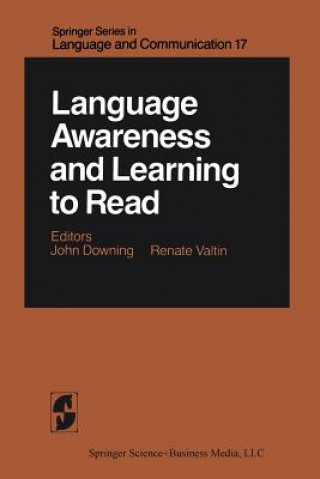
Language Awareness and Learning to Read
 Engels
 125 b
Tot 30 dagen retourrecht
Klanten kochten ook








 /
 Paperback
 24.09
€







During the 1970s there was a rapid increase in interest in metacognition and metalinguistics. The impetus came from linguistics, psychology, and psycho linguistics. But with rather unusual rapidity the work from these scientific dis ciplines was taken over in education. This new direction in these various areas of academic study was taken simultaneously by several different investigators. Although they had varying emphases, their work sometimes appears to be over lapping; despite this, it has been rather difficult to find a consensus. This is reflected in the varying terminology used by these independent investigators "linguistic awareness," "metacognition," "metalinguistic ability," "task aware ness," "lexical awareness," and so on. For educators these developments presented a glittering array of new ideas that promised to throw light on children's thinking processes in learning how to read. Many reading researchers and graduate students have perceived this as a new frontier for the development of theory and research. However, the variety of independent theoretical approaches and their accompanying terminologies has been somewhat confusing.


Informatie over het boek
Engels
Categorieën

Geef dit boek vandaag nog cadeau
Dat gaat heel eenvoudig
1 Voeg het boek toe aan je winkelwagentje en selecteer Als cadeau bezorgen 2 Je krijgt van ons per omgaand een voucher 3 Het boek wordt bezorgd op het adres van de ontvangerDit vind je misschien ook interessant






 /
Paperback
33.23
€



 /
Paperback
21.68
€











 /
Paperback
25.40
€

Hoi! Ik ben Libroamiko, je boekadviseur.
Hoe kan ik je helpen?