
 Contact
 Hoe winkelen bij ons werkt
Bezorging
Winkelgids
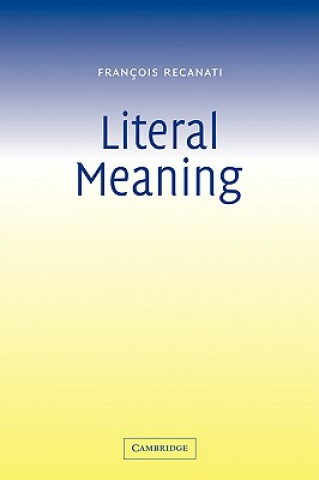
Literal Meaning
 Engels
 111 b
111 b
Tot 30 dagen retourrecht
Klanten kochten ook











 /
/
 Gebonden (paperback)
 13.10
€
13.10
€

 /
Gebonden (paperback)
30.05
€
/
Gebonden (paperback)
30.05
€



 /
Gebonden (paperback)
41.04
€
/
Gebonden (paperback)
41.04
€
 /
Gebonden (paperback)
21.07
€
/
Gebonden (paperback)
21.07
€



According to the dominant position among philosophers of language today, we can legitimately ascribe determinate contents (such as truth-conditions) to natural language sentences, independently of what the speaker actually means. This view contrasts with that held by ordinary language philosophers fifty years ago: according to them, speech acts, not sentences, are the primary bearers of content. François Recanati argues for the relevance of this controversy to the current debate about semantics and pragmatics. Is 'what is said' (as opposed to merely implied) determined by linguistic conventions, or is it an aspect of 'speaker's meaning'? Do we need pragmatics to fix truth-conditions? What is 'literal meaning'? To what extent is semantic composition a creative process? How pervasive is context-sensitivity? Recanati provides an original and insightful defence of 'contextualism', and offers an informed survey of the spectrum of positions held by linguists and philosophers working at the semantics/pragmatics interface.


Informatie over het boek
Engels

Geef dit boek vandaag nog cadeau
Dat gaat heel eenvoudig
1 Voeg het boek toe aan je winkelwagentje en selecteer Als cadeau bezorgen 2 Je krijgt van ons per omgaand een voucher 3 Het boek wordt bezorgd op het adres van de ontvangerDit vind je misschien ook interessant

 /
Gebonden (harde band)
65.45
€
/
Gebonden (harde band)
65.45
€





 /
Gebonden (paperback)
86.53
€
/
Gebonden (paperback)
86.53
€





 /
Gebonden (harde band)
31.56
€
/
Gebonden (harde band)
31.56
€









Hoi! Ik ben Libroamiko, je boekadviseur.
Hoe kan ik je helpen?