
 Contact
 Hoe winkelen bij ons werkt
Bezorging
Winkelgids
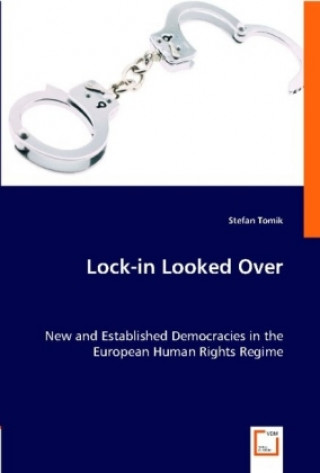
Lock-in Looked Over
New and Established Democracies in the European Human Rights Regime
 Engels
 127 b
127 b
Tot 30 dagen retourrecht
Klanten kochten ook


 /
/
 Gebonden (paperback)
 31.70
€
31.70
€

 /
Gebonden (paperback)
48.41
€
/
Gebonden (paperback)
48.41
€








 /
/
 Kalender
18.50
€
Kalender
18.50
€

Not all democracies are equally enthusiastic to establish and join international human rights regimes that carry enforceable legal commitments. A "lock-in" mechanism derived from republican liberal theory of international relations has been put forward to explain why, against conventional wisdom, new democracies support such regimes more fervently than established ones. The reasoning behind this is that young democracies strive to lock in domestic opponents into democratic rule in the light of political uncertainty, while established democracies do not benefit from strong international human rights enforcement. This study provides an empirical test of the lock-in mechanism and examines the actual willingness of states to accept non-mandatory enforcement clauses foreseen in the European Convention on Human Rights. It finds almost no support for lock-in. In contrast, established democracies accept legally binding commitments more quickly, engage in strengthening the enforcement mechanisms, and extend their human rights policy to regimes in transition. This thesis is directed towards students and researchers in the human rights field.


Informatie over het boek
Engels
Categorieën

Geef dit boek vandaag nog cadeau
Dat gaat heel eenvoudig
1 Voeg het boek toe aan je winkelwagentje en selecteer Als cadeau bezorgen 2 Je krijgt van ons per omgaand een voucher 3 Het boek wordt bezorgd op het adres van de ontvangerDit vind je misschien ook interessant



 /
Gebonden (paperback)
12.90
€
/
Gebonden (paperback)
12.90
€




 /
Gebonden (paperback)
45.21
€
/
Gebonden (paperback)
45.21
€
Hoi! Ik ben Libroamiko, je boekadviseur.
Hoe kan ik je helpen?