
 Contact
 Hoe winkelen bij ons werkt
Bezorging
Winkelgids
 Engels
 204 b
204 b
Tot 30 dagen retourrecht
Klanten kochten ook



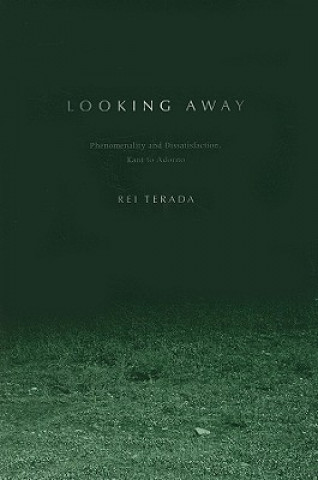
In "Looking Away, " Rei Terada revisits debates about appearance and reality in order to make a startling claim: that the purpose of such debates is to police feelings of dissatisfaction with the given world. Focusing on romantic and post-romantic thought after Kant, Terada argues that acceptance of the world as is is coerced by canonical epistemology and aesthetics. In guilty evasions of this coercion, post-Kantian thinkers cultivate fleeting, aberrant appearances, perceptual experiences that do not present themselves as facts to be accepted and therefore become images of freedom. This phenomenophilia, she suggests, informs romanticism and subsequent philosophical thought with a nascent queer theory. Through graceful readings of Coleridge s obsession with perceptual ephemera, or spectra, recorded in his "Notebooks;" of Kant s efforts in his First and Third Critiques to come to terms with the given world; of Nietzsche s responses to Kant and his meditations on ephemeral phenomenal experiences; and of Adorno s interpretations of both Nietzsche and Kant, Terada proposes that the connection between dissatisfaction and ephemeral phenomenality reveals a hitherto-unknown alternative to aesthetics that expresses our right to desire something other than experience as is, even those parts of it that really cannot be otherwise.


Informatie over het boek
Engels

Geef dit boek vandaag nog cadeau
Dat gaat heel eenvoudig
1 Voeg het boek toe aan je winkelwagentje en selecteer Als cadeau bezorgen 2 Je krijgt van ons per omgaand een voucher 3 Het boek wordt bezorgd op het adres van de ontvangerDit vind je misschien ook interessant



 /
/
 Gebonden (paperback)
 15.76
€
15.76
€

 /
Gebonden (paperback)
44.88
€
/
Gebonden (paperback)
44.88
€


Hoi! Ik ben Libroamiko, je boekadviseur.
Hoe kan ik je helpen?