
 Contact
 Hoe winkelen bij ons werkt
Bezorging
Winkelgids
 Engels
 49 b
49 b
 Nieuw
Nieuw
Tot 30 dagen retourrecht

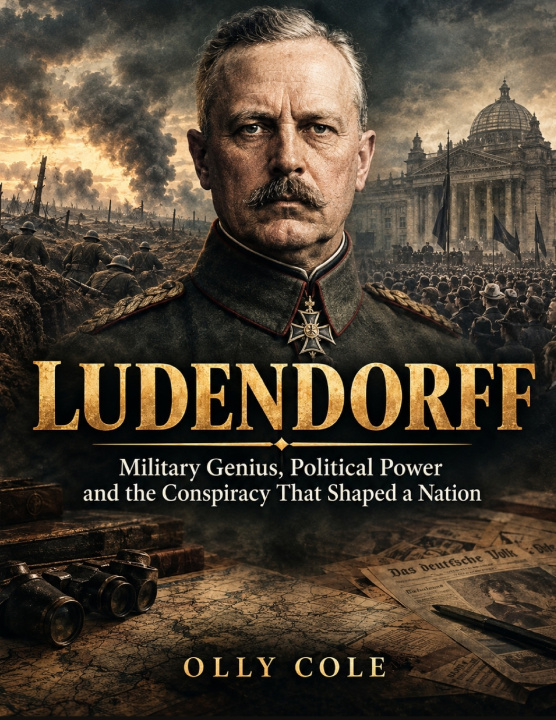
On a cold November morning in 1923, police in Munich opened fire on a column of armed insurrectionists marching through the city center. At their head walked a war hero whose name had once inspired the same reverence Germans reserved for their most celebrated commanders. Five years earlier, he had directed the strategy of an empire. Now he was gambling everything on an alliance with a fringe political agitator named Adolf Hitler.
This is the story of Erich Ludendorff, the man whose brilliance on the battlefield and catastrophic misjudgment off it helped shape the course of the twentieth century.
Born to a struggling Prussian farming family with no claim to the noble titles that dominated Germany's officer corps, Ludendorff rose through sheer discipline and technical mastery to the highest levels of imperial military command. His audacity helped capture the fortress of Liege in the opening days of the First World War. Weeks later, his partnership with Paul von Hindenburg produced one of the most complete victories of the entire conflict at Tannenberg, destroying an entire Russian army and making both men national heroes almost overnight.
By 1916, Ludendorff and Hindenburg had assumed an authority over German military, economic, and political life that amounted to a dictatorship in all but name, with the Kaiser reduced to a marginalized figurehead. Their decisions, from the administration of occupied Eastern Europe to the fateful choice to return the exiled revolutionary Vladimir Lenin to Russia, reshaped the trajectory of a continent. Yet the same instincts that produced victory on the battlefield proved disastrous when applied to the far more complex demands of strategy, diplomacy, and a nation's endurance. Unrestricted submarine warfare drew the United States into the war. A total war economy pushed German society to its breaking point. And when defeat finally came in 1918, it arrived not through foreign invasion but through internal collapse.
Unable to accept that his own strategy had failed on its own terms, Ludendorff constructed an alternative explanation, one that shifted blame onto civilian politicians and a fabricated Jewish conspiracy. That explanation would not remain confined to a general's memoirs. It became a founding myth of Germany's radical right, feeding directly into the movement that would carry Hitler to power a decade later.
This book traces the full arc of Ludendorff's extraordinary and troubling life, from a modest childhood in rural Prussia to command of an empire's armies, from the elation of Tannenberg to the humiliation of dismissal, and from failed coups and a brief career in parliament to his final years of esoteric conspiracy and prophetic warning. Readers will come away with a clearer understanding of how military triumph and political catastrophe can emerge from the very same mind, how the myths nations tell themselves about defeat can prove more consequential than the defeat itself, and how one man's inability to confront his own failure helped clear a path toward an even greater catastrophe.
Ludendorff's story resists easy judgment. He was a tactical genius and a poor strategist, a national hero and a chronic conspirator, a soldier who claimed to despise politics and a man consumed by it for the rest of his life. For readers seeking to understand not just the battles of the First World War but the deeper currents that carried Europe toward its darkest chapter, his life offers a case study in how brilliance, pride, and the refusal to accept responsibility can alter the fate of nations.


Informatie over het boek
Engels

Geef dit boek vandaag nog cadeau
Dat gaat heel eenvoudig
1 Voeg het boek toe aan je winkelwagentje en selecteer Als cadeau bezorgen 2 Je krijgt van ons per omgaand een voucher 3 Het boek wordt bezorgd op het adres van de ontvangerHoi! Ik ben Libroamiko, je boekadviseur.
Hoe kan ik je helpen?