
 Contact
 Hoe winkelen bij ons werkt

Bezorging
Winkelgids
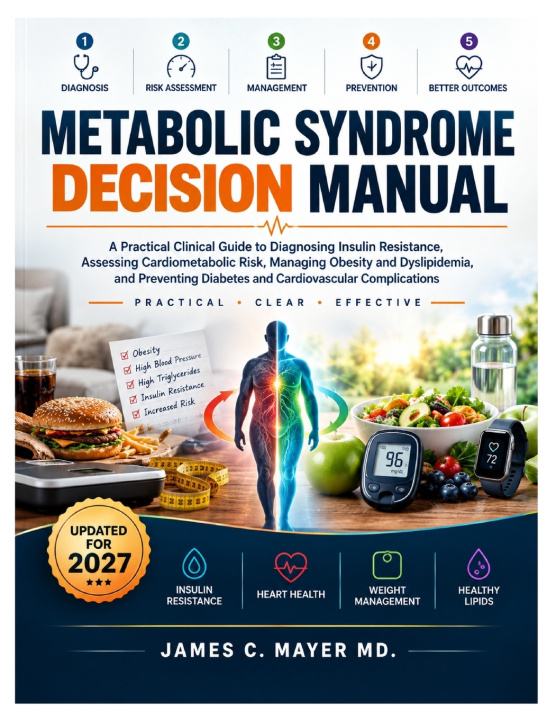
Metabolic Syndrome Decision Manual
A Practical Clinical Guide to Diagnosing Insulin Resistance, Assessing Cardiometabolic Risk, Managing Obesity and Dyslipidemia, and Preventing Diabetes and Cardiovascular Complications
 Engels
 431 b
 Nieuw
Tot 30 dagen retourrecht

Metabolic syndrome is rarely just one abnormal lab result. It is the combination of insulin resistance, abdominal obesity, dyslipidemia, elevated blood pressure, and glucose dysregulation that can complicate clinical decisions and increase long-term cardiometabolic risk.
Metabolic Syndrome Decision Manual offers a practical, clinically focused approach to understanding these interconnected risk factors and translating clinical findings into structured assessment, treatment planning, and preventive care.
Rather than treating each abnormality in isolation, this guide brings together the major components of metabolic syndrome to help healthcare professionals approach diagnosis, risk stratification, and management with greater clarity.
INSIDE THIS CLINICAL GUIDE, YOU'LL EXPLORE:
Diagnostic Assessment and Insulin Resistance: Understand the clinical features of metabolic syndrome, interpret relevant laboratory findings, and evaluate glucose abnormalities and associated risk factors.
Cardiometabolic Risk Stratification: Examine the relationship between obesity, hypertension, dyslipidemia, and glucose dysregulation when assessing an individual's overall risk profile.
Obesity and Weight Management: Explore evidence-based lifestyle interventions and clinical approaches to weight management as part of comprehensive metabolic care.
Dyslipidemia and Cardiovascular Prevention: Understand lipid abnormalities, their clinical significance, and their role in cardiovascular risk assessment and management.
Diabetes Prevention and Glucose Management: Examine strategies for identifying elevated diabetes risk, monitoring glycemic changes, and supporting appropriate preventive interventions.
Associated Organ Complications: Explore the connections between metabolic dysfunction, fatty liver disease, kidney risk, and cardiovascular complications.
Monitoring and Long-Term Care: Understand the importance of follow-up assessment, treatment response, risk-factor monitoring, and timely adjustment of management strategies.
A PRACTICAL PERSPECTIVE ON COMPLEX CLINICAL DECISIONS
Metabolic syndrome requires more than recognizing a collection of diagnostic criteria. Effective clinical management involves interpreting findings in context, identifying the most important modifiable risks, considering relevant comorbidities, and determining when additional evaluation or specialist referral may be appropriate.
This manual emphasizes the clinical relationships between metabolic abnormalities and the decisions that shape prevention and ongoing care. Its integrated perspective helps readers connect individual findings with the broader cardiometabolic picture while keeping patient-specific factors central to clinical judgment.
WHO SHOULD READ THIS BOOK?
This reference is intended for physicians, internal medicine practitioners, family medicine clinicians, endocrinology trainees, cardiology professionals, obesity medicine practitioners, nurse practitioners, physician assistants, pharmacists, dietitians, and other healthcare professionals involved in metabolic health and cardiometabolic risk management.
Whether reviewing diagnostic principles, strengthening risk-assessment knowledge, or exploring approaches to long-term metabolic care, readers will find a focused resource covering the major clinical dimensions of metabolic syndrome.
Bring insulin resistance, obesity, dyslipidemia, diabetes prevention, and cardiovascular risk into one clinical perspective. Explore Metabolic Syndrome Decision Manual as a practical reference for understanding and managing the interconnected challenges of metabolic syndrome.


Informatie over het boek
Engels
Categorieën

Geef dit boek vandaag nog cadeau
Dat gaat heel eenvoudig
1 Voeg het boek toe aan je winkelwagentje en selecteer Als cadeau bezorgen 2 Je krijgt van ons per omgaand een voucher 3 Het boek wordt bezorgd op het adres van de ontvangerHoi! Ik ben Libroamiko, je boekadviseur.
Hoe kan ik je helpen?