
 Contact
 Hoe winkelen bij ons werkt
Bezorging
Winkelgids
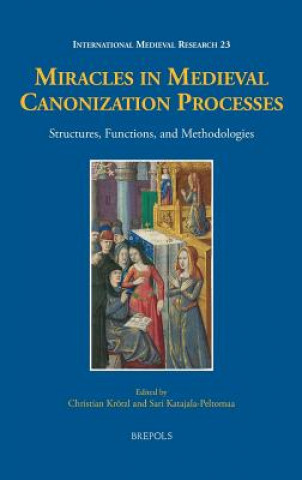
Miracles in Medieval Canonization Processes: Structures, Functions, and Methodologies
 Engels
 281 b
281 b
Retourneren binnen 30 dagen
Klanten kochten ook




 /
/
 Gebonden (paperback)
 35.70
€
35.70
€

When a beneficiary or an eye-witness to a miracle met a scribe at a saint's shrine or a notary at a canonization hearing, it was necessary to establish that the experience was miraculous. Later, the same incident may have been re-told by the clergy; this time the narration needed to entertain the audience yet also to contain a didactic message of divine grace. If the case was eventually scrutinized at the papal curia, the narration and deposition had to fulfil the requirements of both theology and canon law in order to be successful. Miracle narrations had many functions, and they intersected various levels of medieval society and culture; this affected the structure of a collection and individual narration as well as the chosen rhetoric. This book offers a comprehensive methodological analysis of the structure and functions of medieval miracle collections and canonization processes as well as working-tools for reading these sources. By analysing typologies of miracles, stages of composition, as well as rhetorical elements of narrations and depositions, the entertaining, didactic, and judicial aspects of miracle narrations are elucidated while the communal and individual elements are also scrutinized.


Informatie over het boek
Engels
Categorieën

Geef dit boek vandaag nog cadeau
Dat gaat heel eenvoudig
1 Voeg het boek toe aan je winkelwagentje en selecteer Als cadeau bezorgen 2 Je krijgt van ons per omgaand een voucher 3 Het boek wordt bezorgd op het adres van de ontvangerDit vind je misschien ook interessant
 /
Gebonden (paperback)
8.99
€
/
Gebonden (paperback)
8.99
€








Hoi! Ik ben Libroamiko, je boekadviseur.
Hoe kan ik je helpen?