
 Contact
 Hoe winkelen bij ons werkt
Bezorging
Winkelgids
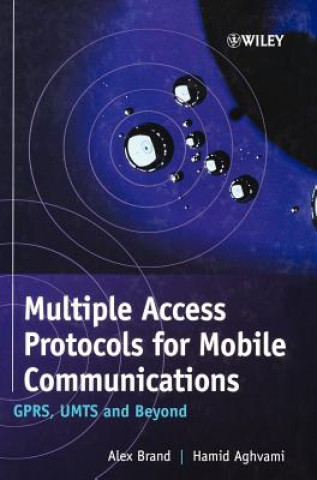
Multiple Access Protocols for Mobile Communications - GPRS, UMTS & Beyond
 Engels
 586 b
586 b
Tot 30 dagen retourrecht
Klanten kochten ook





 /
/
 Gebonden (paperback)
 8.40
€
8.40
€







 /
Gebonden (paperback)
32.81
€
/
Gebonden (paperback)
32.81
€

 /
Gebonden (paperback)
34.84
€
/
Gebonden (paperback)
34.84
€



 /
Gebonden (paperback)
6.68
€
/
Gebonden (paperback)
6.68
€

 /
Gebonden (paperback)
32.10
€
/
Gebonden (paperback)
32.10
€




 /
Gebonden (paperback)
71.21
€
/
Gebonden (paperback)
71.21
€

 /
Gebonden (paperback)
53.17
€
/
Gebonden (paperback)
53.17
€
 /
Gebonden (paperback)
38.38
€
/
Gebonden (paperback)
38.38
€


A comprehensive discussion of multiple access protocols for cellular systems and the consideration of the specific constraints and capabilities of second and third generation systems regarding the multiple access protocols. Beginning by introducing the cellular concept and discussing second and third generation cellular communication systems, including the evolution from these systems to IP-based systems, the authors then identify the requirements for and problems related to multiple access. In accordance with ETSI and 3GPP standards, a split is made into basic multiple access schemes such as CDMA, TDMA and FDMA and multiple access protocols. The pros and cons of CDMA and TDMA for third generation systems are discussed as well as medium access in GSM, GPRS and UMTS, essentially based on R-ALOHA protocols in all these systems. Data access delay and voice dropping performance is assessed and the different UTRA modes are considered. - Provides an accessible text for individuals with little prior knowledge of cellular communication systems or multiple access protocols - Provides an overview of existing material on cellular communications, multiple access protocols and a combination of the two - Presents extensive research carried out by the authors including extended packet reservation multiple access protocols for TDMA, CDMA and hybrid CDMA/TDMA air interfaces, protocol enhancements and modelling of the physical layer A valuable reference resource for researchers and engineers in the field of cellular communications and packet-based communications, as well as postgraduate and research students in this rapidly evolving field.


Informatie over het boek
Engels

Geef dit boek vandaag nog cadeau
Dat gaat heel eenvoudig
1 Voeg het boek toe aan je winkelwagentje en selecteer Als cadeau bezorgen 2 Je krijgt van ons per omgaand een voucher 3 Het boek wordt bezorgd op het adres van de ontvangerDit vind je misschien ook interessant
 /
Gebonden (harde band)
61.79
€
/
Gebonden (harde band)
61.79
€

 /
Gebonden (paperback)
8.70
€
/
Gebonden (paperback)
8.70
€

 /
Gebonden (paperback)
32.10
€
/
Gebonden (paperback)
32.10
€


 /
Gebonden (paperback)
49.32
€
/
Gebonden (paperback)
49.32
€
 /
Gebonden (paperback)
14.78
€
/
Gebonden (paperback)
14.78
€
 /
Gebonden (paperback)
8.60
€
/
Gebonden (paperback)
8.60
€
 /
Gebonden (paperback)
9.41
€
/
Gebonden (paperback)
9.41
€
 /
Gebonden (harde band)
308.87
€
/
Gebonden (harde band)
308.87
€












 /
Gebonden (paperback)
103.12
€
/
Gebonden (paperback)
103.12
€
Hoi! Ik ben Libroamiko, je boekadviseur.
Hoe kan ik je helpen?