
 Contact
 Hoe winkelen bij ons werkt
Bezorging
Winkelgids
Nature and Religion
 Engels
 56 b
56 b
Tot 30 dagen retourrecht

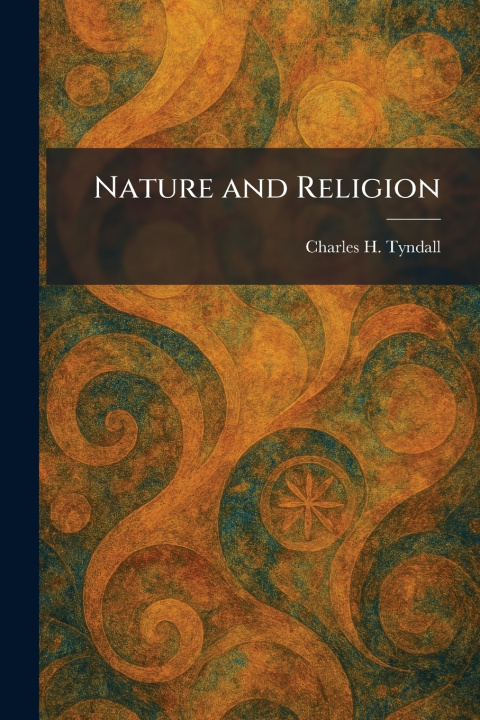
"Nature and Religion" explores the profound and intricate relationship between the natural world and spiritual faith. In this work, Charles H. Tyndall seeks to harmonize the observations of the physical universe with religious conviction, examining how the complexities of biology, physics, and astronomy can be interpreted as evidence of a divine intelligence. The text suggests that the laws of nature are not in conflict with theology but rather serve as a powerful testament to a higher order.
The book delves into the principles of natural theology, arguing that a deeper understanding of the environment and the cosmos can significantly enhance one's spiritual life. By bridging the gap between empirical investigation and traditional belief, Tyndall provides a framework for readers to appreciate the wonders of creation through both a scientific and a devotional lens. "Nature and Religion" stands as an important contribution to the early 20th-century dialogue between science and religion, offering insights into how humanity perceives its place within the vastness of the universe. It remains a compelling study for those interested in the philosophy of science, natural history, and the enduring quest for meaning within the physical realm.
This work has been selected by scholars as being culturally important, and is part of the knowledge base of civilization as we know it. This work was reproduced from the original artifact, and remains as true to the original work as possible. Therefore, you may see the original copyright references, library stamps (as most of these works have been housed in our most important libraries around the world), and other notations in the work.
This work is in the public domain in the United States of America, and possibly other nations. Within the United States, you may freely copy and distribute this work, as no entity (individual or corporate) has a copyright on the body of the work.
As a reproduction of a historical artifact, this work may contain missing or blurred pages, poor pictures, errant marks, etc. Scholars believe, and we concur, that this work is important enough to be preserved, reproduced, and made generally available to the public. We appreciate your support of the preservation process, and thank you for being an important part of keeping this knowledge alive and relevant.


Informatie over het boek
Engels
Categorieën
