
 Contact
 Hoe winkelen bij ons werkt
Bezorging
Winkelgids
 Engels
 148 b
148 b
Tot 30 dagen retourrecht
Klanten kochten ook









 /
/
 Gebonden (paperback)
 21.47
€
21.47
€
 /
Gebonden (paperback)
86.00
€
/
Gebonden (paperback)
86.00
€




 /
Gebonden (harde band)
38.28
€
/
Gebonden (harde band)
38.28
€





















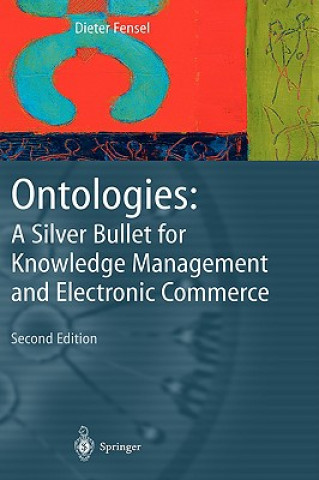
Ontologies have been developed and investigated for some time in artificial intelligence to facilitate knowledge sharing and reuse. More recently, the notion of ontologies has attracted attention from fields such as databases, intelligent information integration, cooperative information systems, information retrieval, electronic commerce, enterprise application integration, and knowledge management. This broadened interest in ontologies is based on the feature that they provide a machine-processable semantics of information sources that can be communicated among agents as well as between software artifacts and humans. This feature makes ontologies the backbone technology of the next web generation, i.e., the Semantic Web. Ontologies are currently applied in areas such as knowledge management in large company-wide networks and call centers, and in B2C, B2G, and B2B electronic commerce. In a nutshell, ontologies enable effective and efficient access to heterogeneous and distributed information sources. Given the increasing amount of information available online, this kind of support is becoming more important day by day.The author systematically introduces the notion of ontologies to the non-expert reader and demonstrates in detail how to apply this conceptual framework for improved intranet retrieval of corporate information and knowledge and for enhanced Internet-based electronic commerce. He also describes ontology languages (XML, RDF, and OWL) and ontology tools, and the application of ontologies.In addition to structural improvements, the second edition covers recent developments relating to the Semantic Web, and emerging web-based standard languages.___________


Informatie over het boek
Engels
Categorieën

Geef dit boek vandaag nog cadeau
Dat gaat heel eenvoudig
1 Voeg het boek toe aan je winkelwagentje en selecteer Als cadeau bezorgen 2 Je krijgt van ons per omgaand een voucher 3 Het boek wordt bezorgd op het adres van de ontvangerDit vind je misschien ook interessant

 /
Gebonden (paperback)
14.27
€
/
Gebonden (paperback)
14.27
€

 /
Gebonden (paperback)
34.64
€
/
Gebonden (paperback)
34.64
€
 /
Gebonden (paperback)
36.86
€
/
Gebonden (paperback)
36.86
€
 /
Gebonden (paperback)
14.88
€
/
Gebonden (paperback)
14.88
€



 /
Gebonden (harde band)
137.97
€
/
Gebonden (harde band)
137.97
€

 /
Gebonden (paperback)
6.78
€
/
Gebonden (paperback)
6.78
€

 /
Gebonden (paperback)
164.81
€
/
Gebonden (paperback)
164.81
€


 /
Gebonden (harde band)
51.76
€
/
Gebonden (harde band)
51.76
€








Hoi! Ik ben Libroamiko, je boekadviseur.
Hoe kan ik je helpen?