
 Contact
 Hoe winkelen bij ons werkt
Bezorging
Winkelgids
 Engels
 345 b
345 b
Tot 30 dagen retourrecht
Klanten kochten ook

 /
/
 Gebonden (paperback)
 15.41
€
15.41
€



 /
Gebonden (paperback)
7.70
€
/
Gebonden (paperback)
7.70
€

 /
Gebonden (paperback)
19.37
€
/
Gebonden (paperback)
19.37
€


 /
Gebonden (paperback)
15.41
€
/
Gebonden (paperback)
15.41
€

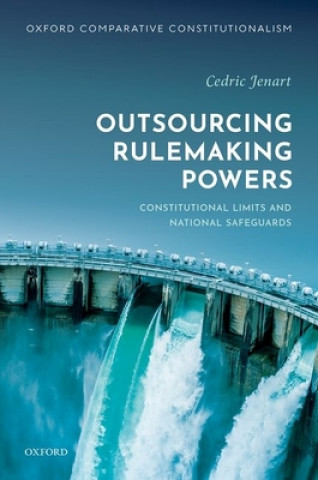
Within democratic states, parliaments have always been regarded as playing a pivotal role in the creation of rules. Through its composition, parliament represents the opinions and interests of society, which it serves through the legislative process. But in an increasingly globalized world, nation-states are confronted with issues that require international cooperation, expert knowledge and flexibility to resolve. Rather than taking the lead, parliaments are increasingly settling for a managerial position and have begun to outsource their rulemaking powers (and other constitutional responsibilities) rather than exercising them themselves. Outsourcing Rulemaking Powers identifies the shared constitutional principles that determine the limits to the outsourcing of rulemaking powers. It asks fundamental questions of its readers, such as: which powers should be outsourced? And to whom? What mechanisms are in place to guarantee the quality of the rules they make? Through the examination of multiple countries, this book argues that there should be minimal legal safeguards to which all rules must heed, in particular those made by autonomous public or private actors. Offering a bridge between traditional constitutional law and transnational private law, this book will be of interest to both practitioners and scholars within the global communities of comparative constitutionalism, global administrative law and transnational private law.


Informatie over het boek
Engels
Categorieën

Geef dit boek vandaag nog cadeau
Dat gaat heel eenvoudig
1 Voeg het boek toe aan je winkelwagentje en selecteer Als cadeau bezorgen 2 Je krijgt van ons per omgaand een voucher 3 Het boek wordt bezorgd op het adres van de ontvangerDit vind je misschien ook interessant

 /
Gebonden (paperback)
56.30
€
/
Gebonden (paperback)
56.30
€




 /
Gebonden (paperback)
9.42
€
/
Gebonden (paperback)
9.42
€
 /
Gebonden (harde band)
125.48
€
/
Gebonden (harde band)
125.48
€
 /
Gebonden (paperback)
5.87
€
/
Gebonden (paperback)
5.87
€
Hoi! Ik ben Libroamiko, je boekadviseur.
Hoe kan ik je helpen?