
 Contact
 Hoe winkelen bij ons werkt
Bezorging
Winkelgids
 Engels
 45 b
45 b
Retourneren binnen 30 dagen
Klanten kochten ook





 /
/
 Gebonden (paperback)
 43.64
€
43.64
€

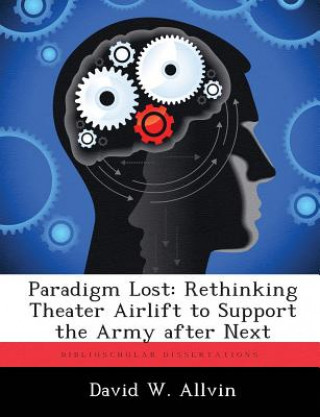
This study analyzes the theater airlift implications for the United States Army's new vision for land warfare in the 21st century, the Army After Next (AAN). The AAN planners envision a lighter, leaner, and more lethal force that will rely heavily on information dominance to maximize combat effectiveness throughout the projected nonlinear battlespace. This new vision requires a change in the role of theater airlift. This thesis addresses the question, "What theater airlift capabilities will be critical to support the Army After Next, and which emerging systems provide the best path to achieve such capabilities?" This paper provides a brief explanation of the fundamental elements of the AAN concept, and their implications for future airlift. From that analysis, the thesis identifies four key capabilities that will be required of theater airlift at unprecedented levels: 1) austere operations, 2) cargo handling capability, 3) situational awareness, and 4) defensive systems. After describing current theater airlift capabilities, the paper provides some alternative paths to acquire the necessary airlift capabilities. The following conclusions were among those developed through analysis. Based on the data available, the tilt wing concept provides the best platform to meet AAN lift/airfield requirements. Also, austere operations will require a "stand-off" capability for evaluating the suitability of opportune landing sites. Autonomous, efficient cargo handling systems embedded in the design of the aircraft will not only enhance flexibility but also increase survivability in hostile environments.


Informatie over het boek
Engels

Geef dit boek vandaag nog cadeau
Dat gaat heel eenvoudig
1 Voeg het boek toe aan je winkelwagentje en selecteer Als cadeau bezorgen 2 Je krijgt van ons per omgaand een voucher 3 Het boek wordt bezorgd op het adres van de ontvangerDit vind je misschien ook interessant





 /
Gebonden (harde band)
137.84
€
/
Gebonden (harde band)
137.84
€
 /
Gebonden (paperback)
8.90
€
/
Gebonden (paperback)
8.90
€
 /
Gebonden (harde band)
44.45
€
/
Gebonden (harde band)
44.45
€




Hoi! Ik ben Libroamiko, je boekadviseur.
Hoe kan ik je helpen?