Contact
 Hoe winkelen bij ons werkt
Bezorging
Winkelgids
 Engels
 103 b
103 b
Tot 30 dagen retourrecht
Klanten kochten ook

 /
/
 Gebonden (paperback)
 46.81
€
46.81
€


 Gebonden (paperback)
5.26
€
Gebonden (paperback)
5.26
€

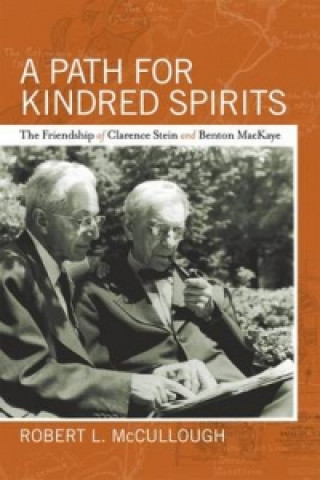
Throughout history friendships between great thinkers have provided the basis for philosophical exchange. Such was the case with Clarence Stein and Benton MacKaye, conservationists and architects, who in the early twentieth century found their shared inspiration in nature. Despite different backgrounds, Stein and MacKaye's belief that the betterment of society lay in its connection to the natural world fueled their dialogue and resulted in their most ambitious projects - MacKaye's plan for the Appalachian Trail and Stein's plan for Radburn, New Jersey. In Radburn, Stein and fellow architect Henry Wright used "superblocks" and cul-de-sacs to create a personal, self-contained community in the midst of a larger, impersonal city setting. Similarly, MacKaye's Appalachian Trail allows people to easily access nature, blurring the line between the industrialized and natural worlds. Robert L. McCullough offers here a detailed account of Stein and MacKaye's personal struggles and public triumphs during several tumultuous decades in American history that encompassed both the Depression and World War II. Using numerous primary resources, including MacKaye's hand-drawn maps of the American countryside and the pair's affectionate letters to each other, McCullough demonstrates Stein and MacKaye's painstaking commitment to their professional careers and their friendship. Arguing that their work would not be as well-rounded - or as well-received - if Stein and MacKaye had not supported and encouraged each other's projects, McCullough solidifies their legacy not only as great American visionaries, but also as caring friends.


Informatie over het boek
Engels

Geef dit boek vandaag nog cadeau
Dat gaat heel eenvoudig
1 Voeg het boek toe aan je winkelwagentje en selecteer Als cadeau bezorgen 2 Je krijgt van ons per omgaand een voucher 3 Het boek wordt bezorgd op het adres van de ontvangerDit vind je misschien ook interessant
 /
Gebonden (paperback)
62.82
€
/
Gebonden (paperback)
62.82
€


 /
Gebonden (harde band)
29.79
€
/
Gebonden (harde band)
29.79
€

 /
Gebonden (harde band)
44.08
€
/
Gebonden (harde band)
44.08
€
 /
Gebonden (paperback)
19.35
€
/
Gebonden (paperback)
19.35
€


 /
Gebonden (paperback)
44.58
€
/
Gebonden (paperback)
44.58
€
 /
Gebonden (harde band)
155.56
€
/
Gebonden (harde band)
155.56
€