Contact
 Hoe winkelen bij ons werkt
Bezorging
Winkelgids
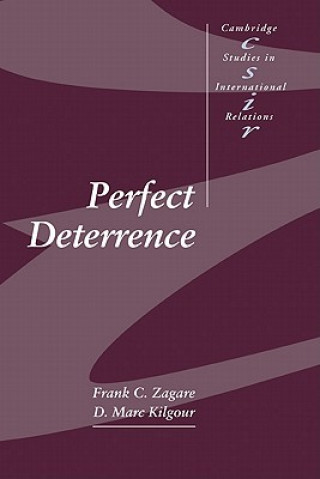
Perfect Deterrence
 Engels
 155 b
155 b
Retourneren binnen 30 dagen
Klanten kochten ook


 /
/
 Gebonden (paperback)
 42.84
€
42.84
€
 /
Gebonden (paperback)
32.63
€
/
Gebonden (paperback)
32.63
€




An important and timely contribution to International Relations and political science, this is the first general analysis of deterrence since the end of the Cold War. Using non-cooperative game theory, the authors develop a new approach to deterrence (Perfect Deterrence Theory), which they apply to unilateral and mutual direct-deterrence relationships, and to extended-deterrence relationships supported by deployment policies such as Massive Retaliation and Flexible Response. The authors focus on the relationship among capabilities, preferences, credibility, and outcomes to achieve a new understanding of threats and responses. Some surprising conclusions emerge, indicating that credible threats to respond to attack can sometimes make an attack more likely, and that incredible response threats can sometimes promote peace. With the application of deterrence theory in diverse social settings, and historical examples from before, during, and after the Cold War, this book provides a welcome new examination of the subject.


Informatie over het boek
Engels
Categorieën

Geef dit boek vandaag nog cadeau
Dat gaat heel eenvoudig
1 Voeg het boek toe aan je winkelwagentje en selecteer Als cadeau bezorgen 2 Je krijgt van ons per omgaand een voucher 3 Het boek wordt bezorgd op het adres van de ontvangerDit vind je misschien ook interessant

 /
Gebonden (paperback)
50.31
€
/
Gebonden (paperback)
50.31
€


 /
Gebonden (paperback)
20.00
€
/
Gebonden (paperback)
20.00
€












 /
Gebonden (harde band)
47.28
€
/
Gebonden (harde band)
47.28
€